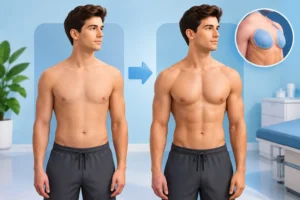
A fitted T-shirt, a changing room or a summer holiday can make chest fullness feel far more noticeable than it does day to day. For many men, it is not about chasing an unrealistic body shape. It is about feeling comfortable taking their shirt off, exercising, and wearing clothes without constantly adjusting the fit. Non-surgical gynecomastia treatment can be a useful option in the right circumstances, but the first and most important question is whether the fullness is caused mainly by fat, glandular breast tissue, or a combination of both.
That distinction changes the treatment plan. A good consultation should never promise that one device or one appointment will solve every type of male chest concern. Instead, it should give you a clear, respectful explanation of what is realistic for your body and what may need medical assessment first.
What is gynecomastia?
Gynecomastia is the enlargement of glandular breast tissue in males. It can affect one side or both, and it may create a firmer area directly behind the nipple. It is common at different life stages, including puberty and later adulthood, and it can be linked to shifts in hormones, certain medications, alcohol or recreational drug use, liver or thyroid conditions, and sometimes no identifiable cause.
Chest fullness is not always true gynecomastia, however. Pseudogynecomastia refers primarily to excess fat stored across the chest. It can occur with weight gain, but it also affects people who are otherwise active and find that their chest is one of the last places to lean out. Many people have a mixed presentation: a small amount of glandular tissue with a layer of stubborn chest fat over it.
This is why an honest assessment matters. Non-surgical body contouring may improve the fat component and the overall chest outline. It does not remove established glandular tissue in the way surgery can.
When to speak with your GP first
New or rapidly changing breast tissue deserves medical attention before any aesthetic treatment. Please arrange a GP appointment if you notice a hard or fixed lump, discharge or bleeding from the nipple, skin dimpling, significant pain, swelling on one side only, enlarged lymph nodes, or unexplained weight loss. The same applies if the change began after starting a new medicine or supplement.
A GP can review your health history, medications and possible hormonal contributors. In some cases, treating the underlying cause is the most appropriate non-surgical approach. A cosmetic consultation should complement medical care, not replace it.
Non-surgical gynecomastia treatment: what can help?
The best approach depends on what is actually present. If glandular tissue is the dominant issue, surgery may ultimately be the only predictable method of removing it. That is not a failure of non-surgical treatment. It is simply the difference between fat and breast gland tissue.
Where stubborn fat is contributing to a fuller chest, non-invasive fat reduction can be considered. At Beautilase, truSculpt iD is used to target areas of unwanted fat with radiofrequency energy. The treatment heats the fat layer beneath the skin in a controlled way, with the aim of reducing fat cells over time while leaving you able to return to normal daily activities straight afterwards.
For suitable clients, this can help create a flatter, more proportionate chest contour without incisions, general anaesthetic or surgical downtime. Results develop gradually as the body processes the treated fat cells, rather than appearing overnight. The change is usually most noticeable over several weeks to a few months, and some people need more than one treatment area or session to pursue their goal.
Treatment is not a substitute for a healthy weight or strength training, but it can be useful when a stable lifestyle has not shifted a localised pocket of chest fat. It is particularly worth discussing if your chest feels soft and diffuse rather than firm and concentrated beneath the nipple.
Lifestyle changes still have a place
If weight gain is a contributing factor, gradual fat loss can reduce pseudogynecomastia and improve the outcome of any body-contouring treatment. A realistic nutrition plan, consistent resistance training and regular movement are more useful than extreme restriction. Building the chest, shoulders and upper back can also improve posture and proportions, although exercises alone cannot spot-reduce fat or remove glandular tissue.
Be cautious with online supplements marketed as testosterone boosters, oestrogen blockers or quick fixes for “man boobs”. Some can be ineffective, interact with medication or complicate a hormone issue. If hormones are a concern, a qualified medical professional is the right person to advise you.
Medication is a medical decision
In selected early or painful cases of genuine gynecomastia, a doctor or specialist may discuss prescription treatment. This is not a standard aesthetic service, and it is not appropriate to self-medicate based on advice from social media. The potential benefit depends on timing, the cause, your medical history and the nature of the tissue.
Long-standing, firm glandular tissue is less likely to respond to medication or non-invasive fat reduction. Knowing this early can save you money, frustration and repeated treatments that are unlikely to meet your expectations.
What happens in a thoughtful consultation?
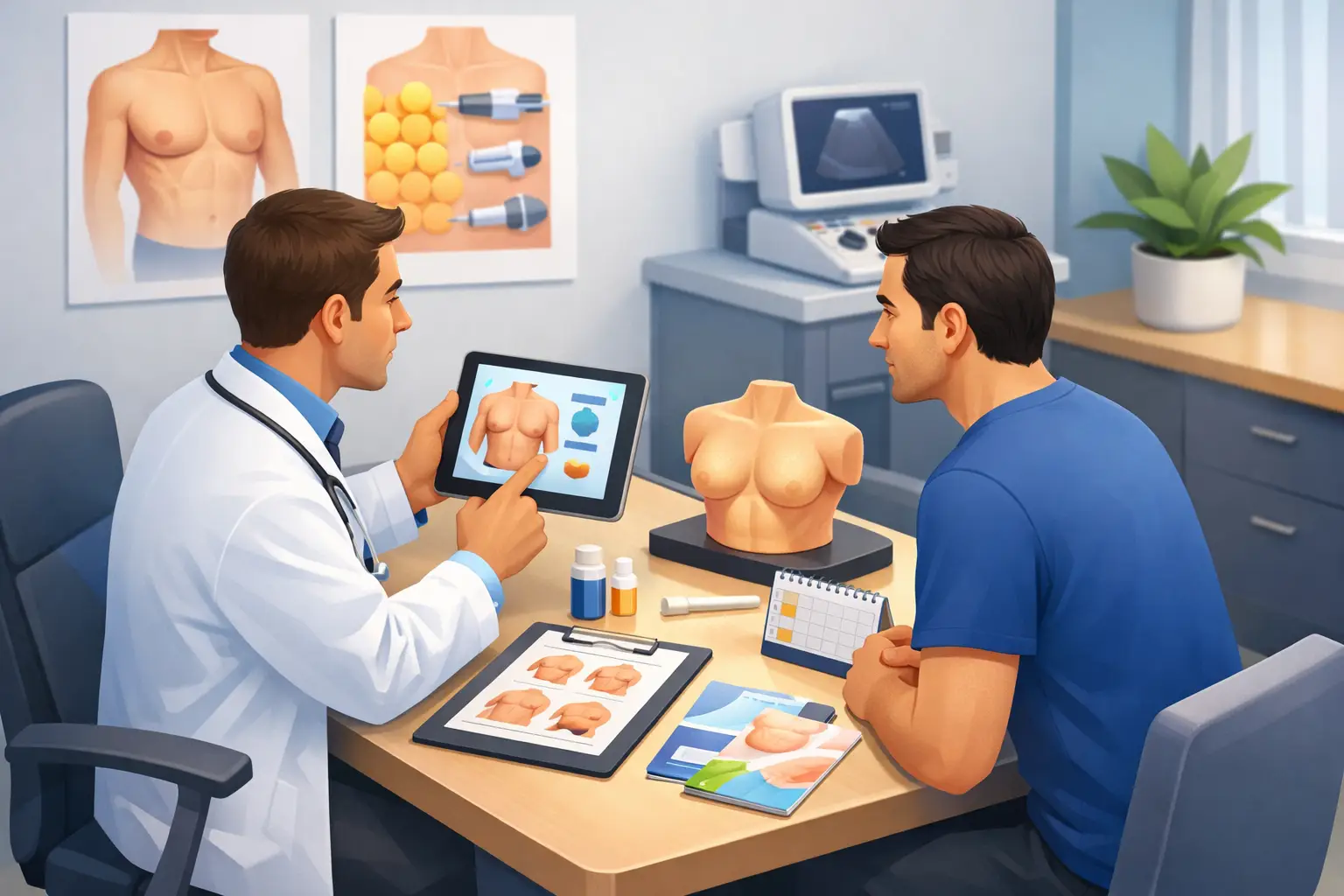
A discreet consultation should feel straightforward, not awkward. You will be asked about when the chest change began, whether it fluctuates, your weight history, medications, exercise routine and any relevant health conditions. Your practitioner will assess the distribution of fullness and skin quality, then explain whether non-surgical contouring appears appropriate.
Photographs and measurements may be used for treatment planning and to compare changes fairly. Lighting, posture and body composition can make a considerable difference in chest photographs, so consistent images are more meaningful than a quick mirror check after one session.
If treatment is suitable, your plan should cover the likely number of sessions, expected timeline, cost and what results are realistic. You should also be told when a medical review or surgical opinion would be more sensible. The right provider will not pressure you into a package simply because chest fat reduction is available.
What results can you reasonably expect?
For pseudogynecomastia, the goal of non-surgical treatment is refinement, not a surgically altered chest. A successful result may mean less projection through clothing, a smoother transition from chest to abdomen, and more confidence in fitted tops. The amount of visible improvement depends on the thickness of the fat layer, your starting body composition, skin laxity and whether glandular tissue is present.
Skin quality matters too. If the skin has been stretched by significant weight changes or long-standing fullness, reducing fat may not create a completely tight result. Some clients may benefit from a wider body plan that considers skin tightening or overall contouring, while others will be better served by a surgical referral.
Fat cells affected by body-contouring treatment are cleared gradually and do not simply grow back. However, remaining fat cells can enlarge with future weight gain. Maintaining a relatively stable weight gives your result the best chance of lasting.
Is non-surgical treatment right for you?
You may be a good candidate if you are generally healthy, close to a weight you can maintain, and have localised chest fat that has not responded as you would like to lifestyle changes. You also need to be comfortable with gradual improvement rather than an instant transformation.
It may be less suitable if you have a clearly firm gland beneath the nipple, a new unexplained change, substantial loose skin, or expectations that a non-invasive treatment will replicate surgery. In these situations, a GP or specialist assessment may be the more valuable next step.
There is no need to feel embarrassed about asking. Chest fullness is a common concern, and a calm, private conversation can replace guesswork with a plan that respects both your confidence and your health. Whether the answer is targeted fat reduction, lifestyle support, medical investigation or a surgical opinion, the most helpful next step is the one that is genuinely right for you.