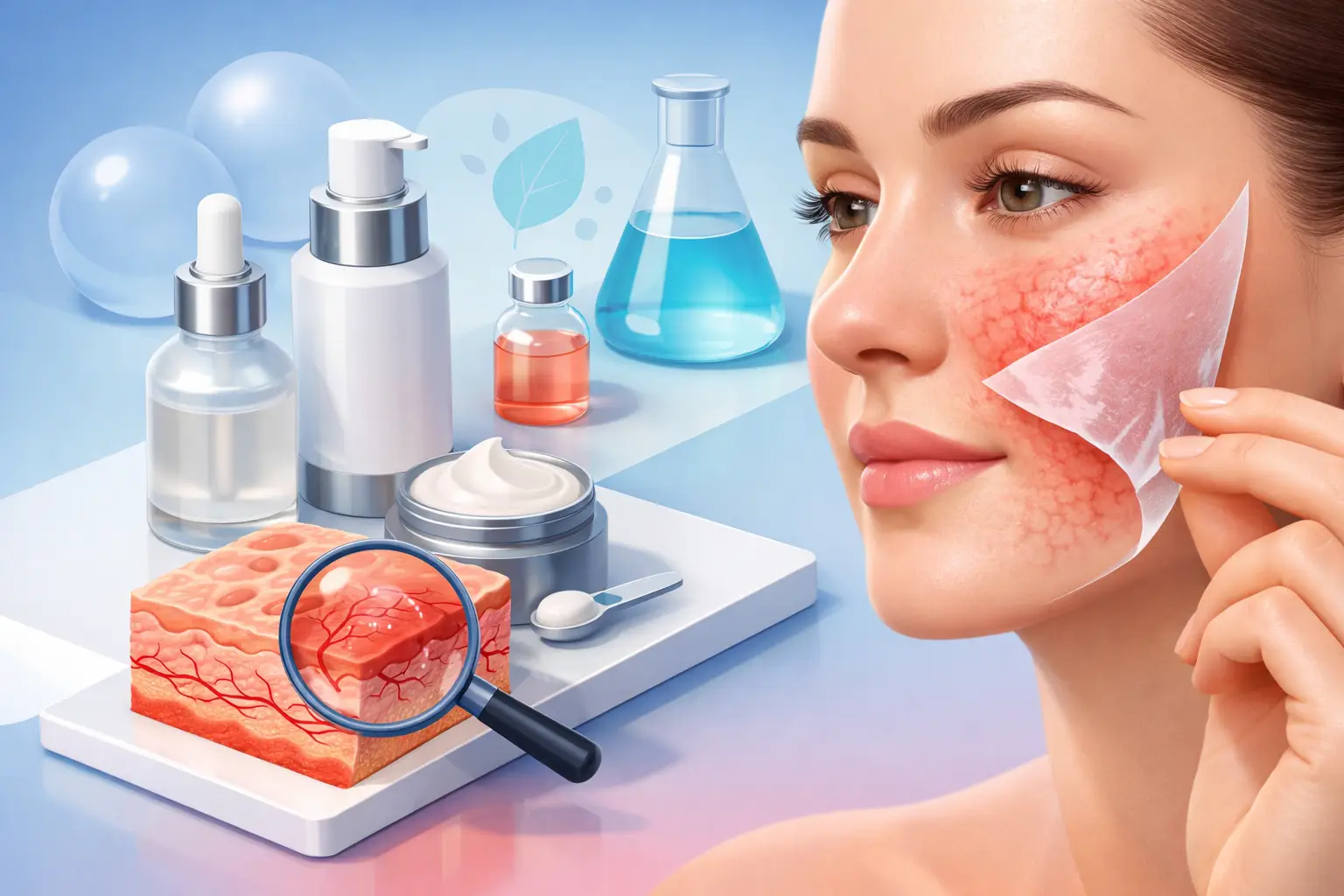
Rosacea is not simply a little redness that needs exfoliating away. It is a chronic, often unpredictable skin condition that can involve flushing, heat, sensitivity, visible vessels, bumps and dryness – sometimes all at once. That is why the question of a medical grade peel for rosacea needs a careful, personal answer rather than a quick yes or no.
For some people, the right professional peel can support smoother texture, congestion, post-breakout marks and a more even-looking complexion. For others, particularly during an active flare, a peel can trigger more irritation and leave the skin feeling tight, hot and unsettled. The difference is in the diagnosis, the timing, the formulation and the preparation of your skin barrier.
Rosacea Skin Does Not Follow One Rule
Rosacea can look very different from person to person. One client may mainly experience persistent central facial redness and flushing. Another may have acne-like papules and pustules, while someone else notices burning, stinging, roughness or dry, reactive skin whenever they try a new product.
This matters because a treatment that is appropriate for oily, congested skin is not automatically appropriate for rosacea-prone skin. Strong acids, abrasive scrubs, frequent exfoliation and poorly chosen active skincare can all compromise an already sensitive barrier. More treatment is not necessarily better treatment.
A professional consultation should also consider whether the concern is definitely rosacea. Acne, perioral dermatitis, contact dermatitis and certain reactions to skincare can look similar. If symptoms are severe, affecting the eyes, rapidly worsening, or causing significant discomfort, medical assessment should come first.
Can a Medical Grade Peel for Rosacea Be Suitable?
Sometimes, yes – but only when the skin is stable and the peel is selected conservatively. A medical-grade peel is not one single treatment. It is a category that includes different active ingredients, strengths, application methods and depths. The aim should never be to make rosacea skin visibly peel or to create a dramatic reaction.
A gentle, professionally selected peel may be considered for concerns that often sit alongside rosacea, such as uneven texture, mild congestion, dullness or superficial pigmentation. Certain formulations can be more compatible with reactive skin than traditional aggressive exfoliation, particularly where they are used at a low strength, for a controlled contact time and with appropriate pre- and post-treatment skincare.
However, a peel is usually not the first priority if your face is currently flushing easily, stinging after cleansing, feeling hot, visibly inflamed or shedding dry flakes. In that situation, the first job is to calm and support the barrier. Treating inflammation before pursuing correction is often the quickest route to healthier-looking skin over time.
When We Would Usually Delay a Peel
A reputable clinic should be comfortable saying “not yet”. It can be disappointing when you want an immediate fix, but it is far better than pushing vulnerable skin into a flare.
We would commonly postpone a peel if you have active irritation, a recent sunburn, open or broken areas, an eczema flare, or a history of reacting strongly to acids. Pregnancy, breastfeeding, prescription skincare, oral medications and recent aesthetic treatments can also affect what is suitable. Retinoids, benzoyl peroxide and exfoliating acids may need to be paused before treatment, but only according to professional advice.
Rosacea triggers are personal too. Heat, alcohol, spicy food, stress, cold wind, exercise and some skincare ingredients can all play a part. A peel appointment should be planned with real life in mind. Booking it immediately before a beach holiday, an important event or a week of outdoor sport is rarely ideal.
The Barrier-First Approach
Before considering any corrective treatment, we look at what your skin is being asked to cope with every day. A simple routine is often more helpful than a crowded bathroom shelf.
A fragrance-free, non-stripping cleanser, a barrier-supporting moisturiser and daily broad-spectrum SPF are the foundations. The right homecare can reduce the cycle of dryness and over-exfoliation that keeps many reactive complexions unsettled. It also gives us a clearer picture of your true skin condition without the noise of multiple changing products.
Once the skin feels more comfortable and consistent, a carefully planned peel may be introduced as one part of a broader programme. It is not a stand-alone cure for rosacea. Think of it as a possible supporting treatment for specific surface concerns, rather than a way to erase the underlying condition.
What a Safe Treatment Plan Should Include
For rosacea-prone skin, the consultation is as valuable as the treatment itself. At Beautilase, personalised planning means discussing your skin history, known triggers, current routine, past reactions, health information and the result you would genuinely like to achieve.
A suitable plan may involve a patch test or cautious first treatment, followed by a period of observation. We assess how your skin responds over the following days, not just how it looks when you leave the clinic. Treatment spacing matters as well. Reactive skin often benefits from a slower, measured approach rather than frequent appointments.
The treatment itself should be paired with clear aftercare. You may be advised to avoid heat, vigorous exercise, saunas, steam rooms, swimming pools and active skincare for a short period. Keep cleansing gentle, apply moisturiser as needed and be meticulous with sun protection. Mild temporary dryness or tightness can occur, but significant burning, swelling, blistering or prolonged worsening should always be reported promptly.
Peels, Redness and Other Treatment Options
If facial redness is your main concern, a peel may not be the most direct choice. Persistent redness and visible vessels can require a different approach from texture or pigmentation. Technology-led treatments may be considered where clinically appropriate, while a carefully managed skincare routine remains essential for maintaining comfort between appointments.
If you are prone to bumps and congestion, treatment can become more nuanced. Some rosacea presentations can resemble acne, yet treating them exactly like acne with strong exfoliation can aggravate the condition. The best plan may combine gentle professional care, targeted homecare and, where necessary, advice from your GP or dermatologist.
Pigmentation also needs a cautious approach. Rosacea-prone skin can become more inflamed when overtreated, and inflammation can contribute to uneven tone. A slower correction plan may feel less dramatic, but it is often the more sensible choice for protecting your skin long term.
Questions to Ask Before Booking
You deserve clear answers before agreeing to any peel. Ask what type of peel is being recommended, why it suits your current skin condition, what result is realistic, and what the practitioner would do if your skin reacts. It is also reasonable to ask whether your redness should be stabilised first and which products you should stop or continue using beforehand.
Be cautious of anyone promising to cure rosacea, remove all redness in one session or treat every reactive complexion with the same peel. Rosacea management is rarely about one dramatic appointment. It is about reducing avoidable irritation, understanding triggers and making considered decisions as your skin changes.
The kindest approach to rosacea is not to attack it. If a medical-grade peel has a place in your plan, it should feel controlled, comfortable and purposeful – with your skin’s resilience taking priority over a quick result.