A change in intimate skin colour can feel surprisingly difficult to talk about, even though it is extremely common. Intimate pigmentation correction treatment is not about making anyone look a certain way. It is about understanding what has changed, ruling out concerns that need medical attention, and discussing whether professional treatment could safely help you feel more comfortable and confident in your skin.
At Beautilase, these conversations are handled with discretion, care and no judgement. Every treatment plan starts with listening. Pigmentation in this area is highly individual, and the safest route is never a one-size-fits-all package.
Why intimate pigmentation can change
The skin around the bikini line, labia, inner thighs, buttocks and underarms is prone to pigmentation because it is regularly exposed to friction, heat, hair removal and hormonal change. A naturally deeper tone in these areas is also completely normal. Treatment is a personal choice, not a necessity.
For some people, colour becomes more noticeable after pregnancy, hormonal contraception, menopause or changes in weight. Repeated shaving, waxing, ingrown hairs and inflammation can leave post-inflammatory pigmentation behind. Tight clothing, exercise, chafing and certain skincare or deodorant products may contribute too.
Skin tone matters when assessing pigmentation. Melanin-rich skin can be more susceptible to marks after irritation, but it can also be treated thoughtfully with the right approach. This is why choosing a practitioner who assesses both the concern and your skin behaviour is so important. Aggressive treatment can create more inflammation, which may worsen the very pigmentation you want to improve.
Not every change in colour is cosmetic. A new, rapidly changing, itchy, painful, bleeding or irregular patch should be checked by a GP or dermatologist before any aesthetic treatment is considered. A responsible clinic will be clear about that boundary.
What does intimate pigmentation correction treatment involve?
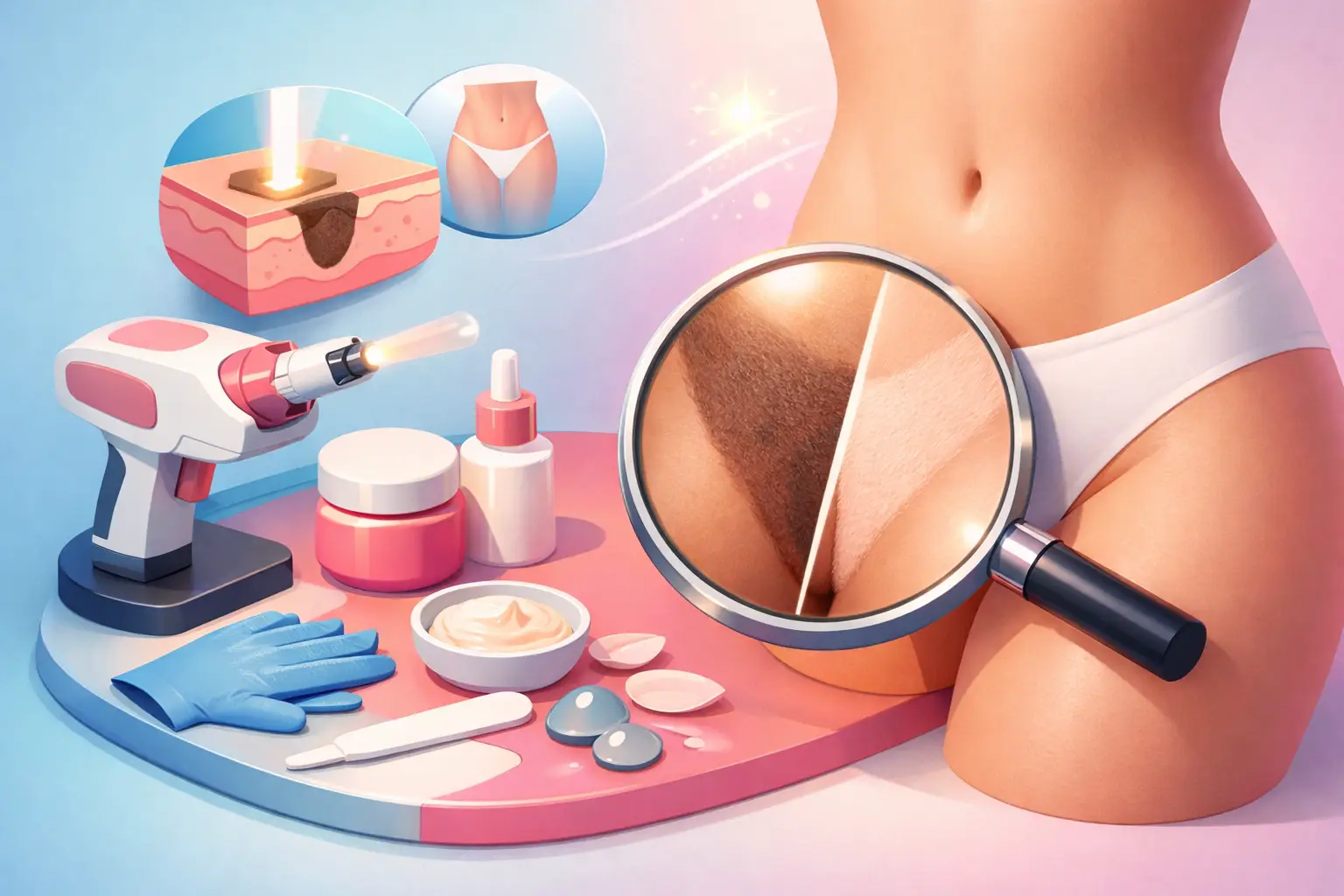
An intimate pigmentation correction treatment plan may involve professional chemical exfoliation, carefully selected topical skincare, hair-removal advice and barrier-supporting aftercare. The best option depends on the location of the pigmentation, its likely cause, your skin type, previous reactions and how sensitive the area is.
The first appointment should be a consultation rather than a promise of instant correction. Your practitioner will ask about your skin history, hair-removal routine, hormonal factors, medications, allergies and previous treatments. They should also establish exactly where the pigmentation sits. Skin on the outer bikini line and inner thighs may be suitable for different options from mucosal or highly delicate areas.
Professional peels and pigment programmes
Medical-grade peels can be useful for some external intimate areas where discolouration is linked to surface-level pigment, friction or post-inflammatory marks. These treatments encourage controlled skin renewal and may be supported by homecare chosen for your skin.
A peel is not automatically appropriate simply because pigmentation is present. In sensitive locations, strength, contact time and preparation matter greatly. The aim is gradual improvement with minimal irritation, not an intense treatment that leaves skin sore or compromised.
For more persistent pigmentation concerns, a practitioner may recommend a structured pigment programme. These programmes often combine in-clinic treatment with carefully prescribed home products and a maintenance plan. Results depend on consistency, and pigment can return if the original triggers – such as friction, inflammation or hormone changes – remain active.
The role of hair removal and skincare
If shaving or waxing is causing bumps, ingrown hairs or repeated irritation, changing the hair-removal method can be an important part of the plan. For suitable candidates, laser hair removal can reduce the cycle of hair growth, shaving and inflammation around the bikini line. It is not a pigmentation treatment in itself, but reducing a known trigger can support clearer-looking skin over time.
Homecare should be purposeful and gentle. Strong acids, scrubs, fragranced products and social-media remedies can be especially risky in intimate areas. Products designed for facial skin are not always appropriate below the waist. Your practitioner may recommend barrier-supporting care and targeted pigment products for external skin only, with clear instructions on where and how to apply them.
What results are realistic?
The goal is usually a more even, calmer-looking tone, not the removal of all natural pigment. Many clients notice gradual change across a series of treatments, particularly when they follow their homecare and reduce sources of irritation. The number of sessions varies. Mild surface pigmentation may respond sooner than pigmentation driven by hormones, longstanding friction or recurrent inflammation.
Results are also influenced by your natural skin tone and the tendency of your skin to pigment after irritation. Some clients need a conservative treatment course with longer intervals between sessions. Others may be better suited to skincare management and prevention rather than clinic-based correction. Honest advice includes recognising when treatment is unlikely to provide enough benefit to justify the expense or risk.
Be wary of anyone guaranteeing dramatic lightening in one appointment. Intimate skin deserves a careful approach. A plan that progresses steadily is usually safer and more sustainable than chasing a quick result.
Preparing for treatment and looking after the area
Your practitioner will give instructions specific to your treatment, but preparation often includes pausing irritating hair-removal methods and avoiding active skincare products for a set period. It is helpful to arrive with the area clean and free from fragranced products, deodorant or self-tan where relevant.
After treatment, the skin may feel warm, dry or mildly sensitive. Temporary darkening can occur before pigment begins to lift, particularly following an exfoliating treatment. Avoid rubbing, exfoliating, hot baths, saunas, intense exercise and tight clothing until the skin has settled. Loose, breathable underwear and clothing can make the recovery period more comfortable.
Do not pick at flaking skin or try to speed up the process with extra product. Over-treating can lead to inflammation and prolong recovery. If you experience significant pain, swelling, blistering or an unexpected reaction, contact your clinic promptly for advice.
Choosing a clinic for a sensitive concern
Intimate treatment requires more than a treatment menu. You should feel able to ask direct questions and receive direct answers. A good consultation covers suitability, expected discomfort, downtime, likely costs, alternatives and the possibility that no treatment is the safest recommendation.
Privacy matters too. Look for a clinic that treats the concern as routine, not embarrassing, and gives you time to decide without pressure. Patch testing or a conservative first session may be sensible, particularly if you have sensitive, reactive or deeply pigmented skin.
It can also help to choose a provider with a broad view of skin health. Pigmentation often overlaps with hair removal, ingrown hairs, hormonal shifts and skincare habits. Addressing those factors together may offer a better long-term outcome than treating colour alone.
Is treatment right for you?
If the pigmentation is stable, external and clearly linked to friction, hair removal or previous irritation, professional support may be worth exploring. If the change is sudden, symptomatic or medically unexplained, medical assessment comes first. And if the colour is simply your natural anatomy, reassurance may be the most valuable result of all.
A private consultation gives you space to discuss the concern properly, understand your options and decide what feels right for you. The best plan is one that respects your skin, your comfort and your reasons for seeking treatment in the first place.