A few minutes with a razor can make unwanted hair disappear before work, a holiday or an event. But if you are shaving your chin every morning, managing bikini-line bumps, or feeling self-conscious about visible facial hair by lunchtime, the question becomes less about speed and more about relief. When comparing electrolysis versus shaving results, the real difference is not simply how smooth the skin feels today. It is whether your method changes the cycle of regrowth at all.
Shaving has a valuable place in a practical grooming routine. Electrolysis can be a long-term solution for individual hairs. Neither is automatically right for every area, skin type or goal, but they produce very different experiences over time.
Electrolysis versus shaving results: the key difference
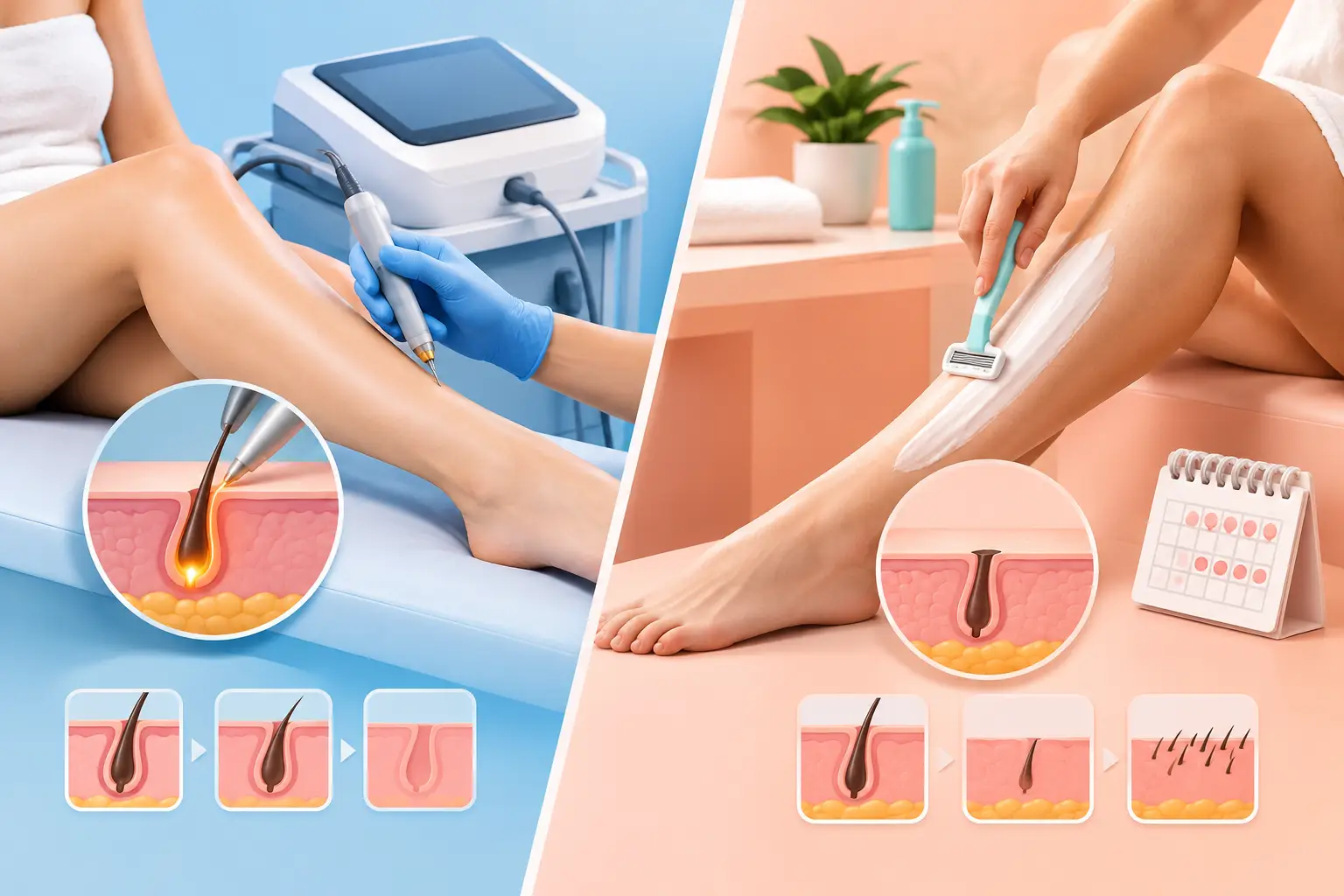
Shaving cuts the hair at the skin’s surface. The follicle beneath the skin remains active, so that hair will continue to grow according to its natural cycle. Results are immediate but temporary. Depending on the area and your hair growth, stubble may return within a day or two.
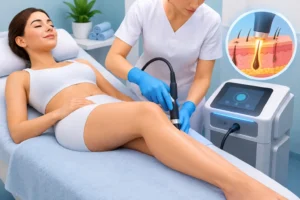
Electrolysis treats the follicle itself. A very fine sterile probe is placed into the natural opening of the follicle, then a controlled electrical current is used to disable the cells responsible for hair growth. The hair is removed from the follicle during treatment. When treated correctly at the appropriate growth stage, that individual follicle can no longer produce a hair.
That is why electrolysis is recognised as permanent hair removal, while shaving is a temporary method of hair reduction. It does not mean electrolysis gives a completely hair-free result after one appointment. Hair grows in cycles, and only hairs in the active growing phase can be effectively treated. A course of treatments is needed to work through the follicles as they become available.
What smoothness looks like over time
Immediately after shaving, skin can feel very smooth, particularly with a fresh blade, warm water and a good shaving product. The result is convenient, but the cut hair has a blunt edge. As it grows out, it can feel prickly, especially on the face, underarms and bikini area.
A common worry is that shaving makes hair grow back thicker or darker. It does not alter the follicle, hair colour or true hair diameter. What changes is the feel and appearance of a blunt hair tip compared with a naturally tapered one. Dense dark regrowth may also be more noticeable against the skin than it was before you shaved.
After electrolysis, the treated area may be slightly pink or tender for a short time, and tiny temporary bumps can occur around the follicles. As treatments progress, many clients notice fewer active hairs and longer intervals of smoothness. The change is gradual rather than instant, but it is meaningful for people tired of organising their lives around constant hair removal.
The treatment area matters
Shaving a lower leg may be quick and relatively uncomplicated. Shaving a few coarse hairs on the chin, upper lip, jawline, nipples or bikini line can be more frustrating because these areas are prone to shadow, irritation and ingrown hairs. Electrolysis is especially useful for smaller zones and isolated hairs where precision matters.
It is also suitable for all hair colours and skin tones. This is important for people with blonde, white, grey or red hair, which may not respond well to light-based hair-removal treatments. For larger areas of dark, coarse hair, laser hair removal may sometimes be a more time-efficient starting point, with electrolysis used afterwards to clear finer or resistant hairs. A personalised assessment should look at the area, hair type, skin sensitivity, hormone history and the result you want to maintain.
Comfort, convenience and commitment
Shaving usually wins on immediate convenience. It can be done at home, costs little upfront and requires no appointment. The trade-off is repetition. Razors, replacement blades, creams and the mental effort of keeping on top of regrowth can add up over months and years.
Electrolysis requires more commitment at the beginning. Sessions may be short for a small facial area or longer when there are more hairs to clear. Sensation varies between people and body areas. Most describe a brief heat or sting with each treated follicle, and settings can be adjusted with comfort in mind. Numbing options may be discussed for particularly sensitive areas.
Treatment frequency is usually higher at first, then reduces as the density of active hair decreases. Hormonal changes can affect the picture. PCOS-related hirsutism, perimenopause, pregnancy-related changes and some medications may trigger new follicles over time. Electrolysis can permanently treat follicles that are treated, but no treatment can prevent the body from activating entirely new follicles in the future.
This is where honest planning matters. A clinic should not promise a fixed number of sessions without seeing the area and understanding your history. Coarse facial hair linked to hormones is different from a small cluster of hairs in a scar, and both deserve an approach that feels realistic and respectful.
Skin health: irritation, ingrowns and pigmentation risk
For sensitive skin, the comparison goes beyond hair removal. Frequent shaving can cause razor burn, cuts, dryness, folliculitis and ingrown hairs. Curly or coarse hair is more likely to curl back into the skin after shaving, creating inflamed bumps and, for some skin tones, lingering post-inflammatory pigmentation.
Technique can make shaving kinder to the skin. Use a clean, sharp blade, soften the hair with warm water, shave with the direction of growth where possible, avoid repeatedly passing over the same patch and moisturise afterwards. Dull blades and dry shaving are common reasons skin becomes sore.
Electrolysis does not suit every situation without preparation. The skin should be assessed carefully, particularly if you are prone to hyperpigmentation, have active acne or dermatitis in the area, use prescription skin treatments, or have a history of cold sores when treating around the mouth. Following aftercare guidance is essential: keep the area clean, avoid picking, limit heat and heavy exercise immediately afterwards if advised, and protect exposed skin from the sun.
With a skilled practitioner and appropriate settings, electrolysis can be a valuable option for reducing the repeated trauma of shaving. Poor technique, however, can increase the risk of prolonged irritation or marks. Choosing an experienced provider is part of protecting your skin, not an optional extra.
Cost: the appointment price is not the whole story
A razor is inexpensive, which makes shaving feel like the lower-cost choice. But it is a continuing expense. Over time, factor in blades, products, time, and any professional help you may seek for persistent ingrowns or pigmentation caused by irritation.
Electrolysis has a higher upfront cost because it is a professional, time-based treatment and requires a course. Its value is in the potential for permanence in treated follicles. For someone removing a handful of facial hairs every day, that long-term benefit can be significant. For someone who only shaves their legs occasionally, the investment may not feel necessary.
The best choice is not the most expensive treatment or the quickest one. It is the one that suits the area, your budget, your tolerance for upkeep and how much unwanted hair affects your confidence.
Who may prefer each option?
Shaving may be the sensible choice when you want a fast, low-commitment result, have a large area to manage occasionally, or are not ready to begin a treatment course. It is also useful between appointments when advised by your practitioner, as shaving does not interfere with the follicle in the way waxing or plucking can.
Electrolysis may be worth considering if you are dealing with persistent facial hair, white or blonde hairs, isolated coarse hairs, regular ingrowns, or the emotional fatigue of daily shaving. It can be particularly affirming for people managing PCOS-related hair growth or unwanted hairs in sensitive areas, where being listened to matters as much as the technical plan.
At Beautilase, a consultation is an opportunity to discuss these details privately and without judgement. The aim is not to push a standard package, but to understand what is growing, why it may be happening, and what level of maintenance feels manageable for you.
The most useful measure of success is not whether you have removed every hair forever by a certain date. It is whether your skin feels calmer, your routine feels lighter, and you have a plan that gives you more confidence in the mirror and in your day.