
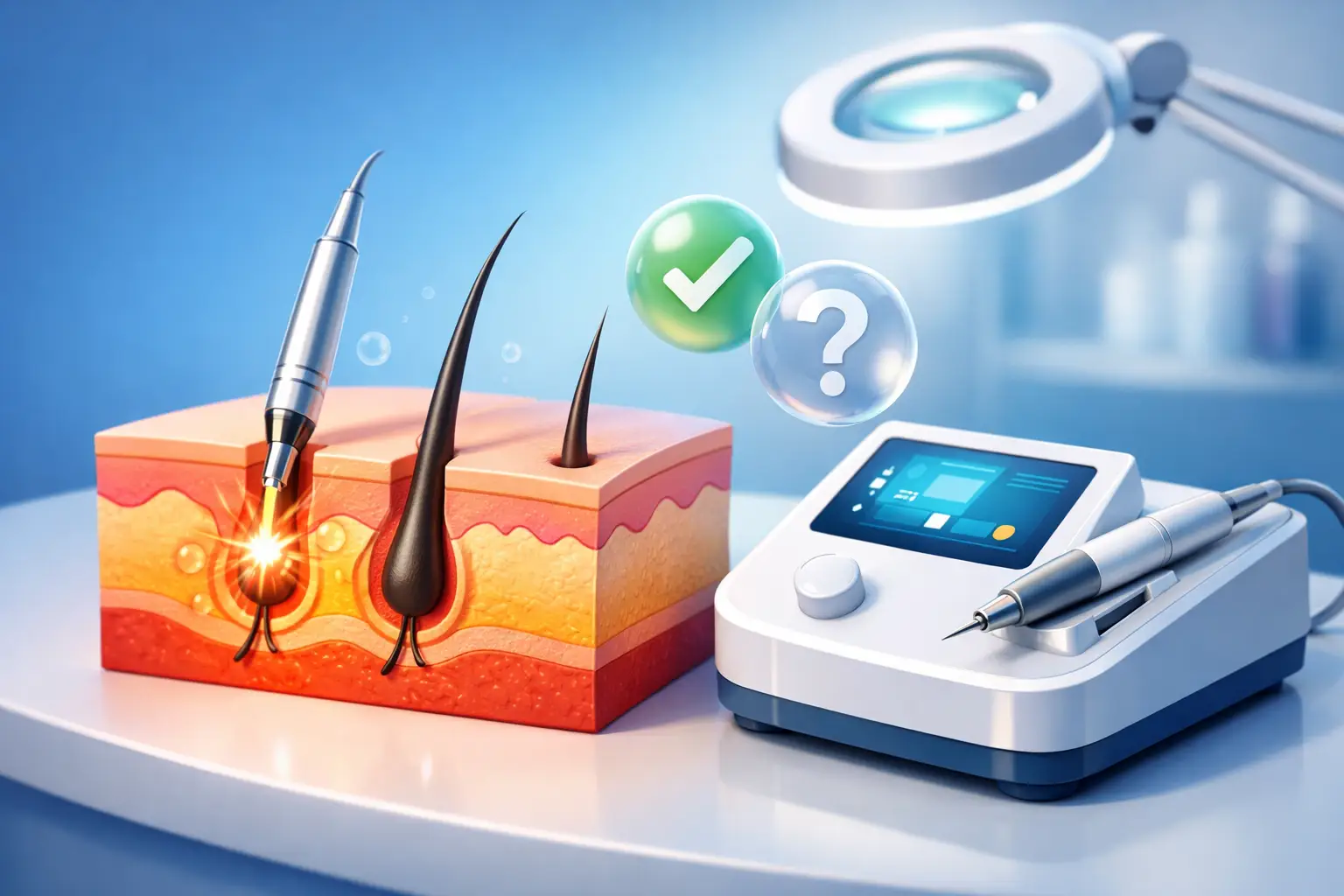
A single coarse chin hair can feel disproportionately frustrating when it returns days after plucking. So, does electrolysis work permanently? Yes, electrolysis can permanently destroy treated hair follicles, making it the recognised method of permanent hair removal. The honest part is that results depend on treating each follicle effectively, at the right stage of growth, across a course of appointments.
This is not a promise that your body will never produce another hair anywhere in the area. Hormones, genetics and certain health conditions can activate previously dormant follicles over time. But a follicle that has been successfully treated with electrolysis should not regrow a hair.
How electrolysis creates permanent hair removal
Electrolysis works one follicle at a time. A very fine sterile probe is gently inserted into the natural opening of the hair follicle, alongside the hair rather than through the skin. A controlled electrical current is then delivered to damage the cells responsible for producing hair. The hair is removed with tweezers and, when the follicle has been treated effectively, it cannot produce another hair.
There are different electrolysis modalities, including thermolysis, galvanic and blend. Your practitioner may select one approach or combine them according to the hair, treatment area and how your skin responds. The precise technique matters far more than a one-size-fits-all setting. Coarse hairs on the chin, for example, need a different approach from fine hairs along the upper lip or around the areola.
Electrolysis is particularly valuable because it is not dependent on hair pigment. Unlike laser hair removal, it can treat blonde, white, grey and red hairs, as well as darker hairs. It is also suitable for small, detailed areas where precision is essential.
Why electrolysis takes more than one session
Hair does not grow in a neat, synchronised cycle. At any one time, nearby follicles are in different phases: actively growing, transitioning or resting. Electrolysis is most efficient when a hair is in its active growth phase, as the treatment can reach the follicle structures most closely connected to the hair.
That is why an area may look clear after an appointment but reveal more hairs over the following weeks. These are often hairs that were already present beneath the skin, or follicles that were inactive at the earlier appointment. They are not necessarily treated hairs growing back.
Treatment schedules vary widely. A small cluster of stubborn hairs may need short appointments over several months. Long-standing facial hair growth, particularly where hormones are involved, may require regular clearing sessions at first, then gradually less frequent visits as the density reduces. The goal is to clear visible hairs, return before the next wave becomes established, and steadily reduce the number of active follicles.
Consistency makes a genuine difference. Leaving very long gaps between sessions can allow more hairs to enter the visible growth cycle, which can make progress feel slower. During a consultation, a thoughtful practitioner should explain what a realistic commitment looks like for your area, hair type and history rather than quoting a universal number of sessions.
Does electrolysis work permanently for hormonal hair growth?
It can permanently remove the individual follicles treated, including hairs associated with polycystic ovary syndrome (PCOS), perimenopause, menopause or hormonal changes. However, electrolysis does not alter the hormone levels driving the pattern of hair growth. If hormonal stimulation continues, new follicles that were previously inactive can begin producing hairs later.
This distinction is important, especially for facial hair. Electrolysis remains an excellent option for PCOS-related hirsutism and recurring chin or jawline hairs, but some people will benefit from occasional maintenance appointments. That is not treatment failure. It is the practical reality of managing a changing hormonal environment while permanently clearing the follicles that are currently active.
If sudden or significant hair growth is new for you, or comes with changes such as irregular periods, acne or scalp hair thinning, speak with your GP as well. A medical assessment can help identify contributors that deserve attention alongside aesthetic treatment.
Electrolysis versus laser hair removal
Laser and electrolysis are often described as competitors, but they can work exceptionally well together. Laser hair removal targets pigment in the hair and is usually the faster option for reducing large areas of dark, coarse hair, such as underarms, legs, bikini line, chest or back. It is generally described as permanent hair reduction because some follicles can recover or new growth can be stimulated over time.
Electrolysis is slower because every hair is treated individually, but it offers permanent removal of successfully treated follicles and is effective regardless of hair colour. It is often the best choice for small areas, isolated coarse hairs, and the fine, pale or resistant hairs left after a course of laser.
For many clients, the sensible route is laser first to reduce bulk, followed by electrolysis to finish the remaining hairs. For others, particularly those with blonde, grey, red or fine facial hair, electrolysis may be the more appropriate starting point. Treating fine facial hair with laser is not always advisable, as in some cases it may encourage paradoxical hair growth. Your hair distribution, skin tone, medical history and goals should shape the plan.
What results should look like during treatment
Early results can be encouraging, but they are rarely perfectly linear. You may notice a patchy reduction in density, softer regrowth in untreated neighbouring follicles, or periods where new hairs seem more noticeable simply because you are paying closer attention. Progress is best judged over months, not from one appointment to the next.
Immediately after treatment, temporary redness, warmth and small raised bumps around follicles are common. These generally settle within hours or a few days, depending on the area and your skin sensitivity. Tiny scabs can occasionally form and should be left alone to heal naturally. Picking, exfoliating too soon or applying heavy, fragranced products can raise the risk of irritation and post-inflammatory pigmentation.
For the first 24 to 48 hours, keep the area clean, avoid heat, saunas, intense exercise and swimming if your practitioner advises it, and protect exposed skin from the sun. Daily broad-spectrum SPF is particularly important when treating the face or any pigmentation-prone area. Follow the aftercare given for your own skin rather than relying on generic advice online.
Safety and choosing the right practitioner
Electrolysis is a technique-led treatment. The quality of the consultation, hygiene, probe selection, current settings and insertion technique all affect both comfort and outcome. It should never feel rushed or casual simply because the area is small.
A professional consultation should cover your skin sensitivity, history of pigmentation, medications, active skin conditions, previous hair-removal methods and any tendency towards scarring. It should also include an honest conversation about discomfort. Most people describe electrolysis as a brief heat or prickling sensation, but sensitivity varies by body area and by time of month. Numbing options may be discussed for more sensitive areas where appropriate.
Avoid waxing, threading or plucking between appointments because these methods remove the hair that needs to be visible for treatment. Shaving or carefully trimming is often acceptable, but ask your practitioner how much growth they need to treat effectively. At Beautilase, treatment planning is tailored to the area, hair pattern and your comfort, with no pressure to fit a standard package.
The realistic answer to permanent results
Electrolysis is permanent at the follicle level, not a guarantee that your hormones and genetics will stand still forever. Successfully treated follicles should not regrow hair. Yet new hairs can emerge from follicles that were dormant or not previously visible, especially on hormonally responsive areas such as the face.
That nuance should feel reassuring, not discouraging. Permanent hair removal is possible, and electrolysis gives you a precise way to work towards it. Start with a clear assessment, commit to the recommended schedule, and let your treatment plan respond to how your skin and hair actually behave. The most satisfying results are built patiently, with expert care and expectations that respect your body rather than making unrealistic promises.