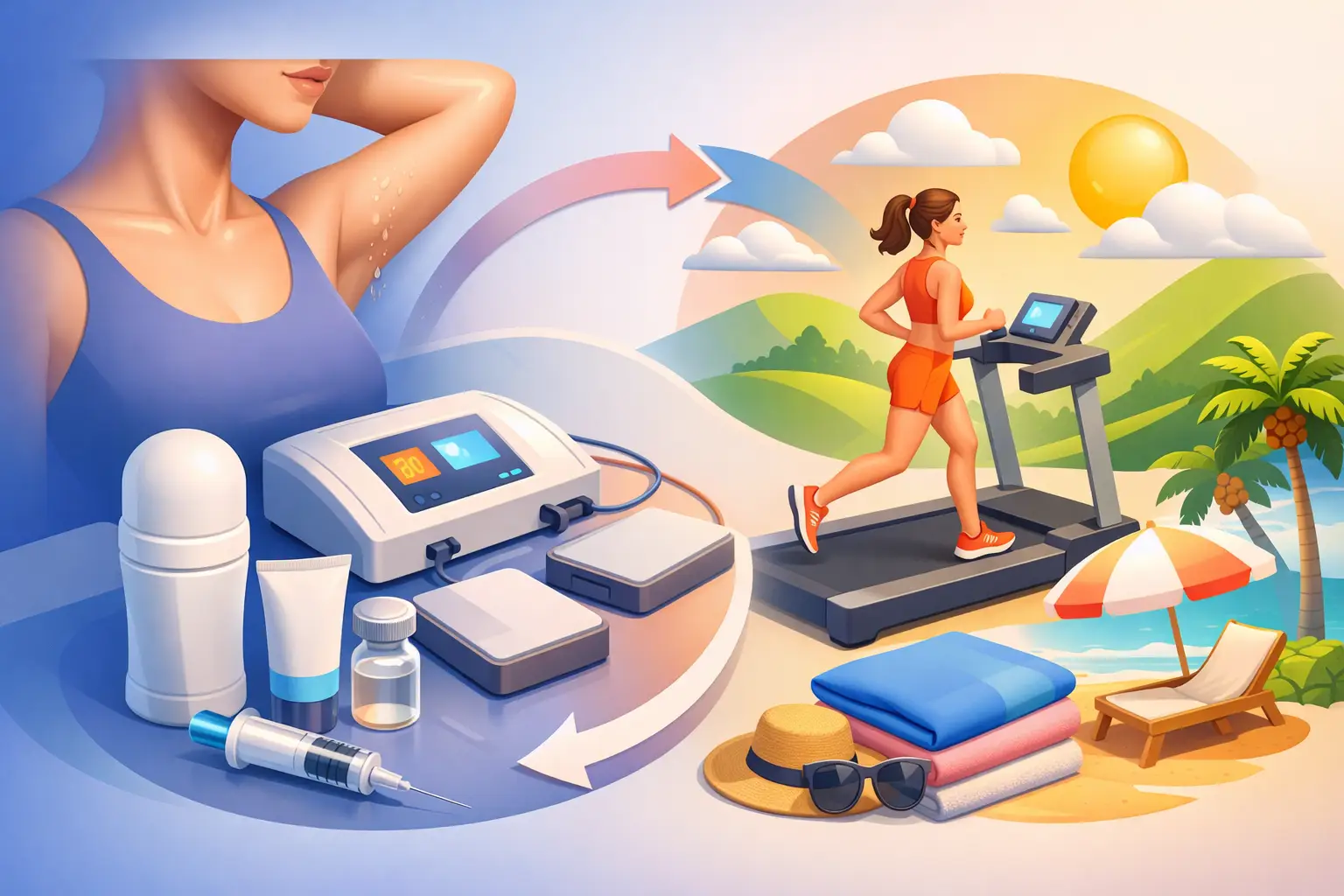
A damp handshake, sweat marks appearing minutes after getting dressed, or constantly checking whether your feet are slipping in your shoes can make ordinary moments feel far more stressful than they should. Hyperhidrosis treatment is about more than reducing perspiration. It is about helping you feel comfortable in your clothes, at work, in social settings, and in your own skin.
Excessive sweating is common, yet many people spend years trying to manage it quietly with stronger deodorants, extra layers, tissues, and a change of shirt in their bag. There is no need to minimise how much it affects you. With the right assessment, there are effective options that can reduce sweating and make day-to-day life feel easier.
What counts as excessive sweating?
Sweating is a normal and necessary way for the body to regulate temperature. Hyperhidrosis is different. It refers to sweating that is excessive for the conditions, often occurring even when you are cool, relaxed, or not exercising.
Primary hyperhidrosis most often affects the underarms, hands, feet, face, scalp, or groin. It can begin in childhood or adolescence and may run in families. Some people sweat in one main area, while others experience several areas at once. The impact is highly individual: one person may be concerned about visible underarm patches, while another finds sweaty palms interfere with work, handshakes, driving, or using a phone.
Secondary hyperhidrosis is sweating caused by another factor, such as a medication, hormonal change, infection, thyroid condition, diabetes, anxiety, menopause, or another medical issue. It is more likely to start suddenly, affect the whole body, or occur during sleep. If sweating is new, severe, accompanied by other symptoms, or waking you at night, a GP review should come first. Treating the cause matters more than masking the symptom.
Hyperhidrosis treatment starts with the right questions
There is no single best treatment for every person. A thoughtful consultation should establish where you sweat, when it happens, what you have already tried, and how much it disrupts your confidence or routine. Your medical history, current medication, pregnancy or breastfeeding status, and skin sensitivity also influence what is appropriate.
At Beautilase, this conversation is handled discreetly and without judgement. Excessive sweating can feel like an awkward concern to raise, particularly when it affects intimate areas or has been dismissed in the past. It deserves the same personalised, practical approach as any other skin or body concern.
A good treatment plan also considers your priorities. Are you looking for a fast solution before a wedding, presentation, holiday, or special event? Would you prefer an option that can be maintained through the year? Are your hands or feet the main issue, or is underarm sweating affecting your wardrobe? Clear answers make it easier to choose a realistic route forward.
Treatment options for excessive sweating
Clinical-strength antiperspirants
For mild sweating, aluminium-based antiperspirants are often the first step. Unlike deodorant, which primarily helps with odour, antiperspirant temporarily reduces the amount of sweat reaching the skin’s surface. These are usually applied to completely dry skin at night and washed off in the morning, following the product directions carefully.
They can work well for some people, but irritation is common, particularly after shaving or on sensitive underarm skin. They may also be less effective when sweating is moderate to severe. If a product stings, causes a rash, or leaves your skin sore, pushing through is not the answer. Adjusting application technique, using a suitable soothing product, or discussing another option is more sensible.
Iontophoresis for hands and feet
Iontophoresis uses a mild electrical current delivered through water to help reduce sweating in the hands and feet. It is usually performed as a course of regular sessions before moving into maintenance. For people whose palms or soles are their main concern, it can be a valuable non-surgical option.
The trade-off is commitment. Results rely on consistent treatment, and not everyone finds the routine convenient. It may not be suitable for people with certain medical devices or conditions, so professional advice is essential before starting.
Prescription medicines
Some oral medicines can reduce sweating by blocking nerve signals involved in sweat production. They may be considered when several areas are affected or when local treatments have not provided enough relief.
Because these medicines work throughout the body, side effects such as dry mouth, blurred vision, constipation, or urinary difficulties can limit their suitability. This is a medical discussion rather than a cosmetic quick fix, and a prescribing clinician should guide it.
Botulinum toxin injections
For underarm hyperhidrosis, botulinum toxin injections are one of the best-established clinic-based treatments. Small, carefully placed injections reduce the nerve signals that activate the sweat glands in the treatment area. The aim is not to stop your body from cooling itself altogether. It is to significantly reduce excessive local sweating.
Appointments are typically straightforward, and most people return to normal activities soon afterwards. Results do not appear instantly, but improvement commonly develops over the following days and can last for several months. Maintenance is needed as the nerve signals gradually return, and the exact duration varies between individuals.
This approach can also be used for areas such as the hands, feet, face, or scalp in selected cases. These sites need additional care and experience. Hand and foot treatment, for example, can be more uncomfortable, may require appropriate numbing, and may carry a temporary risk of local muscle weakness. An honest consultation should cover these points before you decide.
Procedures that target underarm sweat glands
Some energy-based procedures are designed to reduce underarm sweat glands more permanently. They may appeal to people who want to reduce reliance on repeat injections. However, they are not interchangeable with every other treatment, and suitability, expected results, cost, downtime, and potential side effects need to be weighed carefully.
A permanent-sounding option is not automatically the right option. For someone who wants a reversible, predictable treatment with little downtime, injections may be preferable. For another person with persistent underarm concerns, a longer-term procedure could be worth exploring with a suitably qualified provider.
Preparing for treatment and maintaining results
Your practitioner may ask you to avoid shaving, applying antiperspirant, or using fragranced products shortly before an underarm appointment, depending on the treatment planned. Wear comfortable clothing, and let them know about medicines, allergies, previous reactions, or any changes to your health.
After treatment, follow the aftercare advice given for your specific procedure. With injections, this may include avoiding heavy exercise, heat exposure, or vigorous rubbing of the area for a short period. Small marks, tenderness, or minor bruising can occur, but these are generally temporary.
It is also helpful to separate sweat reduction from odour control. Reduced sweating often improves odour because there is less moisture for bacteria to thrive in, but deodorant and good skin hygiene may still have a place in your routine. If irritation, rashes, or recurrent folliculitis are part of the picture, these should be addressed too rather than treated as an afterthought.
When confidence returns, life gets simpler
The most meaningful outcome of hyperhidrosis treatment is often surprisingly practical: wearing colours you once avoided, raising your hand in a meeting without hesitation, holding someone’s hand, or leaving home without packing spare clothes. Those changes matter.
You do not have to wait until sweating feels unbearable to seek advice. A private consultation can clarify what type of excessive sweating you may have, rule out concerns that need medical input, and help you choose an approach that respects both your comfort and your lifestyle.