
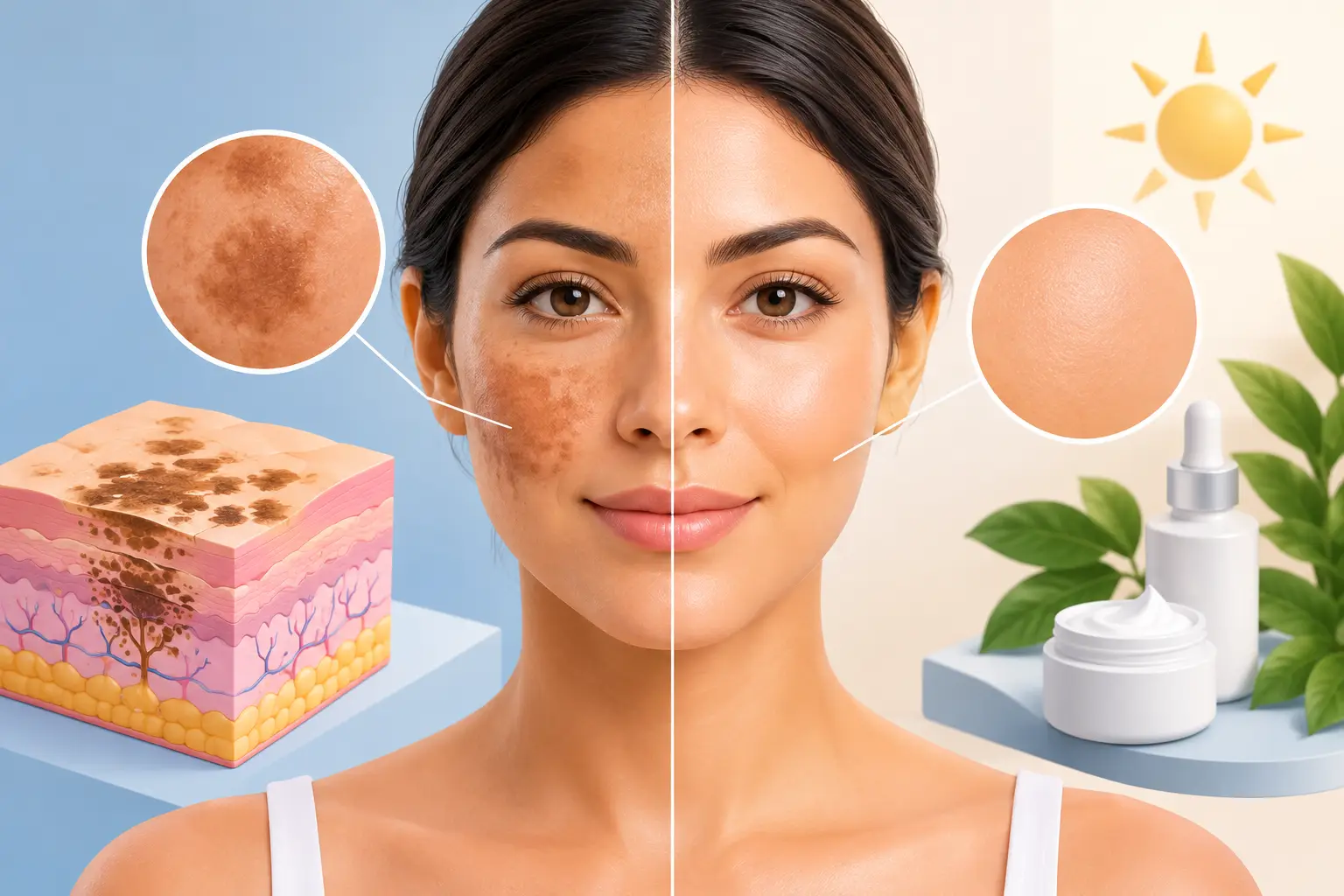
A melasma before after photo can be reassuring when the patches on your cheeks, forehead or upper lip have started to affect how you feel without make-up. But the most useful images are not a promise of identical results. They show what may be possible when treatment, home care and sun protection are managed consistently for your particular skin.
Melasma is one of the more complex pigmentation concerns we treat because it is driven by more than surface discolouration. Hormones, heat, ultraviolet exposure, visible light, genetics, inflammation and certain skincare habits can all contribute. It can fade beautifully with the right approach, yet it also has a tendency to return if its triggers are not addressed.
What a realistic melasma before after result looks like
The strongest results usually look like a gradual softening of brown, grey-brown or uneven patches, followed by a brighter, more even-looking complexion. In some cases, the pigment becomes far less noticeable rather than disappearing completely. That is still a meaningful result, particularly when the skin also looks calmer and healthier overall.
A genuine before and after comparison should be taken in similar lighting, from the same angles and without filters. Daylight, camera exposure, foundation and even a slight change in facial expression can alter how pigmentation appears. Melasma can also look darker after a sunny day, a warm workout or a holiday, so a single photograph rarely tells the whole story.
The timing matters too. Early improvements may be seen in several weeks, but deeper or long-standing melasma often needs a programme lasting several months. The best outcome is not simply a lighter patch of skin after one appointment. It is stable improvement that you can maintain without constantly irritating your skin.
Why melasma is not treated like a simple sun spot
Sun spots and age spots are often clearly defined areas of pigment caused largely by cumulative sun exposure. Melasma tends to be more diffuse and symmetrical, and the pigment may sit at different levels within the skin. This is why an aggressive approach can be counterproductive.
Too much heat, friction, exfoliation or an unsuitable laser setting can trigger inflammation. Inflammation may stimulate pigment production and make melasma appear darker, especially in skin that tans easily or has a deeper tone. This does not mean advanced treatments are off limits. It means the treatment choice, settings, preparation and aftercare need to be considered carefully.
During a consultation, a practitioner should look beyond the visible patches. Your skin type, previous reactions to products or procedures, current skincare, pregnancy or breastfeeding status, hormonal contraception, medication, sun exposure and history of pigmentation all help shape a safer plan. An honest assessment may include advising you to pause a treatment that is not appropriate right now.
The treatment plan behind meaningful change
For many people, progress starts with a carefully selected home-care routine. Medical-grade pigment-regulating products may help reduce excess melanin activity while supporting the skin barrier. The precise ingredients and strength should be chosen for your skin, because a routine that leaves you red, dry or stinging is unlikely to help melasma long term.
Professional pigmentation programmes such as Cosmelan or Dermamelan may be recommended for suitable clients. These programmes combine an in-clinic mask with structured home care and are designed to address stubborn pigmentation more intensively. They require commitment: there can be visible redness, dryness and peeling during the active phase, and instructions need to be followed closely. For the right person, this focused approach can create a substantial shift in uneven tone.
Medical-grade peels can also have a place when chosen conservatively and timed properly. The goal is controlled skin renewal, not dramatic peeling for its own sake. Depending on your skin and the type of pigmentation present, a peel may be used as part of a wider course rather than as a stand-alone fix.
Laser and energy-based treatments need particularly thoughtful planning for melasma. Some technologies can support an overall pigmentation strategy in selected cases, while heat-based treatment may worsen pigmentation when used too aggressively or at the wrong time. A clinic that promises to erase melasma with one laser session is overlooking the condition’s complexity. The safer question is whether the treatment suits your skin today, and how it fits into a longer maintenance plan.
Sun protection is treatment, not an optional extra
If there is one factor that separates short-lived improvement from more dependable progress, it is daily protection from light. Broad-spectrum SPF 50 should be worn every day, not only when the forecast looks bright. Auckland’s UV levels can be high even when the weather is overcast, and incidental exposure from driving, walking the dog or sitting near a window can be enough to reactivate pigment.
For melasma, visible light can matter as well as UV. A tinted sunscreen containing iron oxides may be particularly useful for some people because it offers additional protection against visible light. A hat, sunglasses and shade are practical partners to sunscreen, especially during midday outdoor time.
This is not about avoiding life outdoors. It is about giving your treatment plan a fair chance. If you are training outside, spending weekends at the beach or travelling somewhere sunny, your maintenance routine may need to work harder. We can plan around real life rather than asking you to put it on hold.
What can slow down your before and after progress
Melasma rarely improves in a perfectly straight line. A hormonal change, a warm summer, missed sunscreen applications or a new active product can cause a temporary flare. It is understandable to want to add more products when this happens, but over-treating irritated skin often creates another setback.
Common problems include combining too many acids, using strong retinoids without guidance, scrubbing away flaking skin, or stopping prescribed home care as soon as the complexion looks clearer. Pigment responds better to steady, measured care. If your skin becomes persistently sore, itchy or inflamed, the plan should be reviewed rather than pushed through.
Pregnancy-related melasma, often called chloasma, needs additional care. Some active ingredients and professional procedures are not suitable during pregnancy or breastfeeding. A practitioner can help you focus on safe protection and barrier support first, then review corrective options at the appropriate time.
How to judge whether your treatment is working
Try not to assess your skin every morning in a different bathroom mirror. Take a clear baseline photo before starting treatment, then repeat it every four to six weeks in the same location, lighting and position. Alongside photographs, notice whether you need less concealer, whether the edges of patches look less defined and whether your skin tolerates its routine comfortably.
Your appointments are also an opportunity to adjust the plan. Some clients need a gentler pace; others are ready to progress after their skin has settled. At Beautilase, this is why treatment is built around consultation rather than a standard package. Your history, lifestyle and response to care matter as much as the label on the treatment.
Maintenance protects the result you have earned
Once melasma has improved, maintenance becomes the quieter but essential part of the process. This may mean continuing selected home-care products, using sunscreen diligently, booking occasional review treatments and acting early if you notice pigment returning. The routine can often become simpler over time, but it should not disappear completely.
A good melasma before after journey is not about chasing flawless, filter-like skin. It is about understanding what your skin needs, making progress safely and having a plan that still feels manageable months from now. With patient, personalised care, clearer and more even-looking skin can be a realistic goal.