
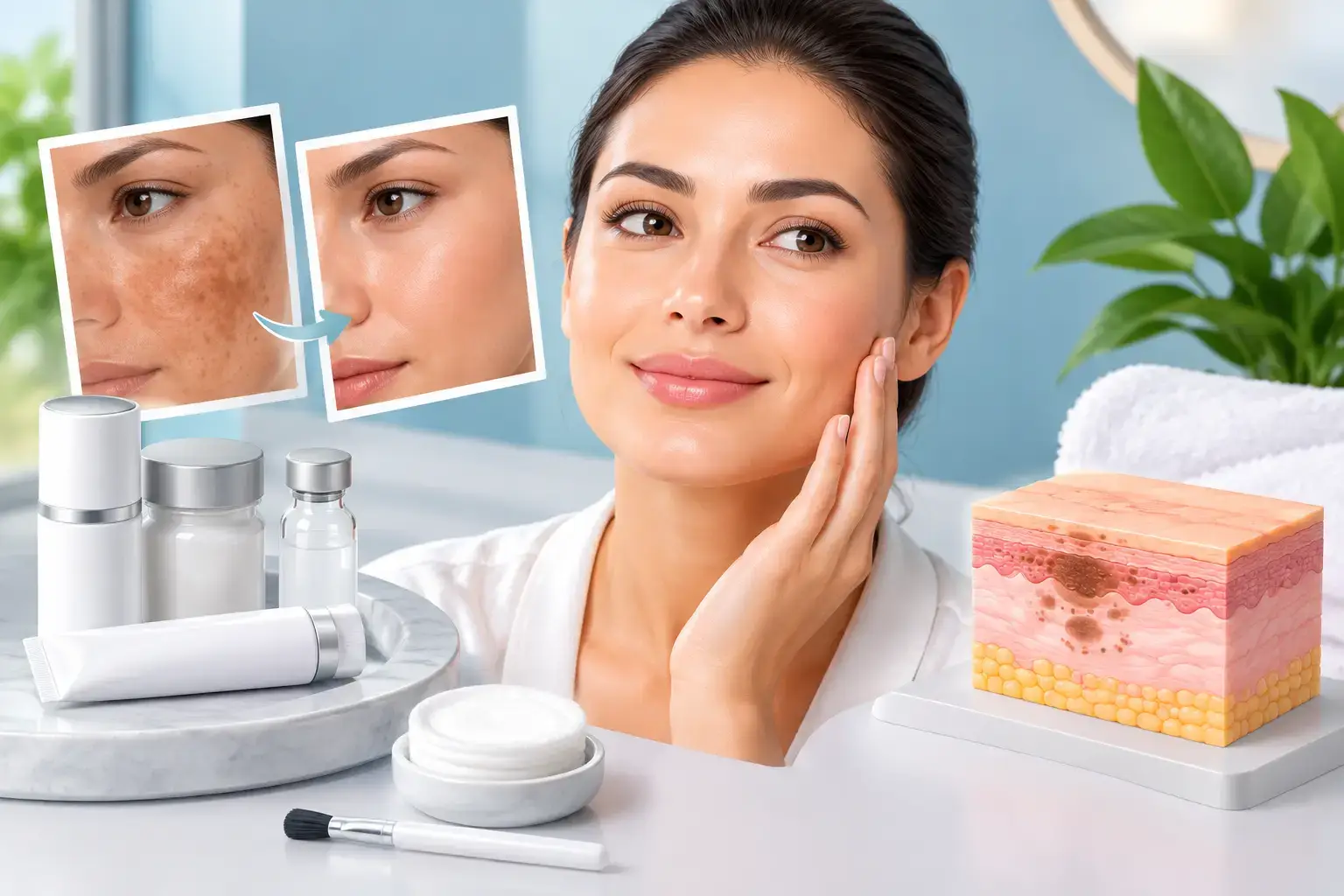
Pigmentation can be frustratingly persistent. You may have tried brightening serums, sunscreen and exfoliation, only to find that melasma, sun spots or uneven patches return as soon as summer arrives or your routine slips. This Dermamelan treatment review explains what the programme involves, who it may suit, and why aftercare matters just as much as the in-clinic appointment.
Dermamelan is not a quick facial designed to leave you glowing for a weekend. It is a professional depigmenting programme for more established and stubborn pigmentation concerns. For the right person, it can create a meaningful improvement in clarity and evenness. It does, however, require commitment, tolerance for a visible recovery period and realistic expectations.
Dermamelan treatment review: what is it designed to do?
Dermamelan is a medical-grade pigmentation programme that works to reduce excess melanin production while encouraging skin renewal. It is commonly considered for melasma, post-inflammatory hyperpigmentation following acne, sun damage, age spots and uneven skin tone.
Unlike a single peel or laser session, Dermamelan combines a clinic-applied mask with prescribed homecare. The treatment is designed to address pigmentation at multiple stages, which is particularly valuable for melasma. Melasma is influenced by heat, ultraviolet exposure, visible light, hormones and genetics, so it can be difficult to manage with one treatment alone.
The goal is not to promise perfectly uniform skin or permanently erase every mark. Skin is living tissue and pigmentation can be reactivated. A well-managed Dermamelan programme aims to fade visible discolouration, improve overall luminosity and give you a practical maintenance plan to help protect your results.
What happens during a Dermamelan programme?
Your journey should begin with a detailed consultation. A practitioner needs to assess the type, depth and likely trigger of your pigmentation, as well as your current skincare, skin sensitivity, history of cold sores and any recent treatments. Not all brown marks are treated in the same way, and not every form of pigmentation is suitable for an intensive depigmenting programme.
At the clinic appointment, the skin is cleansed and prepared before the Dermamelan mask is applied. You leave the mask on for a practitioner-directed period before removing it at home. The timing varies according to your skin, concern and protocol, so following the instructions precisely is essential.
After the mask is removed, the active homecare phase begins. This usually involves regular use of the Dermamelan maintenance cream, a gentle cleanser, moisturiser and broad-spectrum sunscreen. The homecare product is not an optional extra. It is a central part of the programme and helps continue the work started in clinic.
Follow-up appointments allow your practitioner to check healing, adjust frequency if your skin is becoming too reactive and guide the transition into maintenance. At Beautilase, this personalised oversight is particularly important because two people with melasma can have very different sensitivity levels, lifestyles and triggers.
The recovery: expect peeling, redness and adjustment
The most honest Dermamelan treatment review must include the recovery period. Many clients experience warmth, redness, tightness, dryness and flaking after treatment. Some peel lightly, while others peel more noticeably around the mouth, nose and chin. Your skin may also feel temporarily more sensitive to water, skincare products and temperature changes.
The first week is often the most visible. For some, redness and flaking settle reasonably quickly; for others, especially those with sensitive or compromised skin barriers, the adjustment can take longer. You should not pick or scrub at peeling skin. Doing so can increase irritation and, in pigmentation-prone skin, potentially create further discolouration.
This is not always an ideal treatment to book immediately before a wedding, important work presentation, beach holiday or event where you want zero downtime. Planning ahead makes the process far less stressful. If discretion matters, your practitioner can discuss what recovery may realistically look like for your skin and how to support it with appropriate moisturising and sun protection.
When do Dermamelan results appear?
Some people see a brighter, clearer appearance after the initial peeling settles. More significant changes tend to develop gradually as the programme continues and the skin completes its renewal cycle. The early improvement can be encouraging, but consistency over the following weeks and months is what supports the best outcome.
Results depend on several factors: the cause and depth of pigmentation, your skin type, adherence to homecare, sun exposure, hormonal influences and how well your skin tolerates active ingredients. Superficial sun spots may respond differently from longstanding melasma, and post-acne marks can need an approach that also addresses active breakouts and inflammation.
A good outcome is often a reduction in the intensity and spread of pigmentation rather than total removal. This distinction matters. Clinics that promise a permanent cure for melasma are not giving the full picture. Melasma is a chronic tendency, and long-term management commonly includes diligent SPF use, pigment-safe skincare and occasional professional review.
Who may be a good candidate?
Dermamelan can be especially helpful for adults troubled by diffuse melasma, facial pigmentation that has not improved with over-the-counter skincare, or post-inflammatory marks left after acne. It may also be considered for people whose pigmentation has worsened after pregnancy, hormonal changes or repeated sun exposure.
Suitability always depends on an individual assessment. If your skin is actively irritated, severely dry or recovering from another procedure, it may be better to focus on barrier repair first. Active acne, rosacea flare-ups and eczema need careful management, as stronger depigmenting treatments can aggravate already inflamed skin.
Pregnancy, breastfeeding, certain medications and recent use of prescription skincare may also affect timing or suitability. Your practitioner should ask about these factors openly and without judgement. The safest plan is not necessarily the fastest one.
Dermamelan versus laser or chemical peels
There is no single best treatment for every pigmentation concern. Laser can be highly effective for certain defined sun spots or freckles, but heat-based treatments need careful selection for melasma because heat can be a trigger for some people. Chemical peels can improve surface dullness and mild uneven tone, yet may not offer the same intensive homecare-driven approach as Dermamelan.
Dermamelan is often chosen when pigmentation is widespread, hormonally influenced or prone to returning. Its trade-off is that it asks more from you at home. If you prefer a low-maintenance treatment with no peeling, it may not be your first choice. If you are prepared to follow a structured programme and protect your skin daily, it can be a valuable option.
In some cases, a practitioner may recommend preparing the skin first, combining treatment with a tailored skincare plan, or considering another modality once the skin is stable. The best route is based on your diagnosis, not on whichever treatment is most popular.
Aftercare that protects your investment
Aftercare is where many pigmentation plans succeed or fail. Use the prescribed products exactly as advised, including any adjustments made when your skin feels dry or irritated. Keep cleansing gentle, avoid scrubs, retinoids and strong acids unless your practitioner has advised otherwise, and resist the temptation to add new products because you want faster results.
Daily broad-spectrum sunscreen is essential, including on cloudy days and when you are mainly indoors near windows. A hat and shade are sensible additions, particularly during high-UV periods. For melasma-prone skin, reducing heat exposure where possible can also be useful, as hot workouts, saunas and prolonged sun exposure may be triggers for some individuals.
Most importantly, communicate if your skin becomes increasingly sore, swollen, itchy or unusually reactive. Temporary redness and peeling can be expected, but treatment should never become something you simply endure in silence. A personalised plan has room to be adjusted.
Clearer skin rarely comes from chasing the strongest treatment or the quickest promise. It comes from choosing the right programme for your pigmentation, respecting your skin’s recovery and giving yourself consistent care long after the first visible improvement.