A face can look tired for more than one reason. Sometimes the issue is skin laxity around the jawline or neck; sometimes it is reduced cheek support, a softer facial contour, or expression lines that have become more noticeable. That is why the choice between EMFACE versus Ultherapy should not come down to whichever treatment is trending. They work in very different ways, and the best option depends on what is changing in your face and what you would like to improve.
Both are non-surgical treatments designed to support a firmer, more refreshed appearance. Neither is a replacement for a surgical facelift, and neither should be sold as one. However, for the right person, each can be a valuable part of a carefully planned facial rejuvenation programme.
EMFACE versus Ultherapy: the key difference
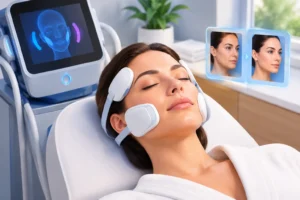
EMFACE is designed to address both the skin and the muscles beneath it. It combines synchronised radiofrequency with HIFES facial muscle stimulation. The radiofrequency warms the dermis to encourage collagen and elastin production, while the muscle stimulation contracts targeted facial muscles at a level that would be difficult to achieve through voluntary exercise alone.
In practical terms, EMFACE is often chosen when a client wants more facial support and definition, particularly through the cheeks, brow and lower face, alongside improvement in the appearance of fine lines. The treatment is needle-free, does not require injections, and typically involves a series of sessions.
Ultherapy works differently. It uses focused ultrasound energy to target selected depths beneath the skin, including deeper structural tissue. The controlled heat is intended to stimulate the body’s collagen response, gradually improving the look of skin firmness and lift. It is commonly considered for laxity around the brow, under the chin, jawline, neck and décolletage.
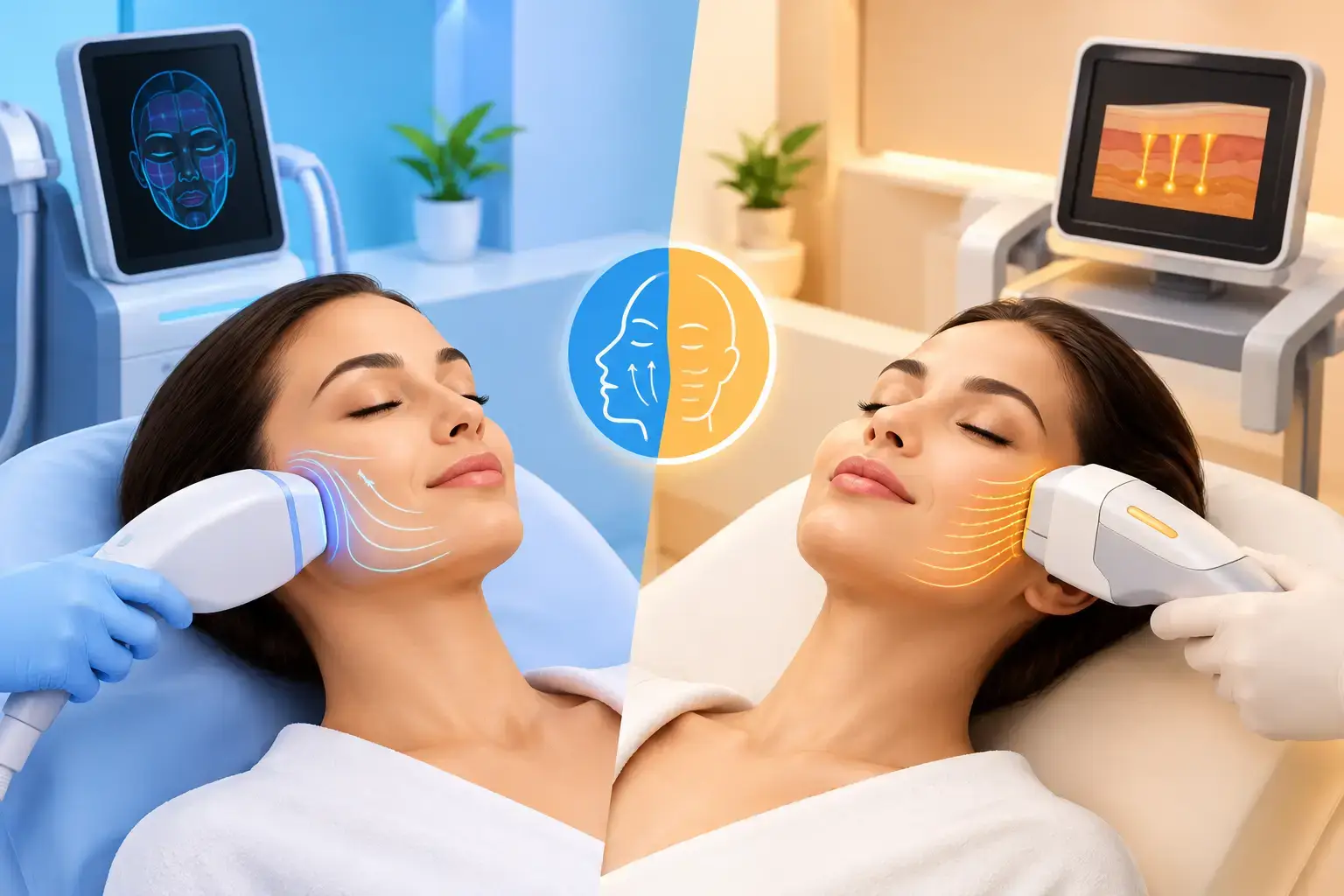
The simplest way to understand the distinction is this: EMFACE focuses on skin quality and facial muscle support, while Ultherapy focuses on collagen stimulation in deeper tissue to address skin laxity. There can be overlap in the visible goals, but the route each treatment takes is not the same.
What EMFACE may be better suited to
EMFACE can be particularly appealing if your face is beginning to look flatter, less supported or less defined, rather than simply loose. As we age, changes to facial muscles, fat pads, collagen and bone structure all contribute to a less lifted appearance. Improving skin texture alone may not fully address that change.
A typical EMFACE programme may help clients who notice early to moderate loss of cheek definition, a heavier-looking lower face, softening around the jaw, or lines that are becoming more apparent as skin support changes. Some people also prefer it because there are no needles and no recovery period. You can generally return to work, errands or social plans immediately afterwards.
During treatment, you will feel warmth from the radiofrequency and repeated muscle contractions. The contractions can feel unusual at first, especially around the forehead or cheeks, but they are brief and controlled. Most clients find the treatment manageable, and sessions are relatively quick.
Results develop over time rather than appearing overnight. The muscle stimulation and collagen response need time, so the most meaningful changes are usually seen in the weeks after completing the recommended course. Maintenance may be advised depending on your skin, muscle tone, lifestyle and longer-term goals.
When Ultherapy may be the stronger choice
Ultherapy is often considered when the primary concern is skin laxity, especially in the lower face and neck. If you can pinch loose skin beneath the chin, have noticed a less crisp jawline, or feel that your neck is beginning to look crepey, its deeper ultrasound-based approach may be more relevant than a muscle-focused treatment.
It can also be a good fit for someone seeking a non-surgical lift but who understands that improvement will be gradual and modest compared with surgery. Collagen remodelling is a biological process. It takes time, and the outcome depends on factors such as age, degree of laxity, skin quality, sun exposure and smoking history.
Ultherapy is commonly performed as a single treatment, although this is not a rule for everyone. Some clients benefit from further treatment after a period of time, particularly if laxity is more advanced or they are aiming to maintain their result. A personalised assessment matters here, because treating too aggressively or expecting a dramatic surgical-style change can lead to disappointment.
Comfort is an important consideration. Ultherapy can be more intense than EMFACE because energy is delivered at deeper levels. Sensations vary by area and individual tolerance, but clients may feel heat, prickling or brief deeper pulses. A practitioner should discuss comfort measures in advance and make sure you know what to expect.
Results, downtime and treatment planning
Neither treatment usually involves significant social downtime. With EMFACE, temporary redness or a flushed feeling is possible after treatment, but most people resume normal activities straight away. With Ultherapy, there may be temporary redness, tenderness, mild swelling, tingling or sensitivity in the treated area. These effects generally settle, but they should be discussed before you decide.
The bigger difference is the treatment schedule. EMFACE is usually delivered as a course because its benefits build with repeated muscle stimulation and radiofrequency treatments. Ultherapy is more commonly a one-off collagen-stimulation treatment, with results continuing to develop over several months.
This does not mean one is automatically more convenient. Four shorter appointments may suit someone who likes gradual progress and enjoys the comfort of regular check-ins. Another person may prefer a single, more intensive Ultherapy appointment followed by patience while collagen remodelling takes place. Your availability, comfort level and budget are all valid parts of the decision.
Can EMFACE and Ultherapy be combined?
For some clients, yes. EMFACE and Ultherapy can complement one another because they address different elements of facial ageing. For example, a person with reduced cheek support as well as laxity under the chin may benefit from a plan that considers muscle support, skin collagen and the deeper tissue beneath the jawline.
Combination treatment should never be a default upsell. It needs a clear reason, safe spacing between procedures and an honest discussion about whether the likely benefit justifies the additional cost. Sometimes one well-chosen treatment is the sensible starting point. In other cases, skin quality may need attention first through medical-grade skincare, pigmentation management, RF microneedling or another appropriate treatment.
It is also worth recognising when non-surgical treatment has limits. Marked jowls, significant neck laxity or a large amount of excess skin may respond only modestly to energy-based treatments. A candid consultation should include this conversation. The aim is to help you make an informed choice, not to persuade you that every concern has a machine-based solution.
How to choose between EMFACE and Ultherapy
Start with the concern you see most clearly. If your main frustration is a face that looks less lifted, less expressive or less defined through the cheeks and brow, EMFACE may be the more relevant option. If loose skin around the jawline, under-chin area or neck is your priority, Ultherapy may be worth considering.
Then consider the quality of your skin, the degree of laxity and how much change you are realistically hoping to see. Younger clients with early signs of ageing may be excellent candidates for preventative collagen support. Those with more established laxity may still see improvement, but they need realistic expectations about the scale of change.
At Beautilase, the consultation is where these details matter. We assess your facial anatomy, skin condition, concerns, previous treatments and comfort preferences before recommending a plan. You should leave knowing not just what is being recommended, but why it suits your face and what results are realistic for you.
The right treatment should feel like a considered decision rather than a guess. When you understand whether your concern is mainly skin laxity, reduced facial support or a combination of both, you can choose a plan that respects your features and supports a naturally refreshed result.