A facial treatment that works on both skin and muscle is understandably appealing, particularly if you have begun noticing a softer jawline, flatter cheeks or lines that make you look more tired than you feel. This EMFACE treatment review looks beyond the headlines to explain what the treatment actually does, who tends to be pleased with it, and when another option may be more appropriate.
EMFACE is not a replacement for surgery, fillers or every other skin-tightening treatment. It is a needle-free technology designed to support facial muscle tone while improving the quality and firmness of the skin above it. For the right person, it can be a very useful way to refresh the face without injections, downtime or an artificial-looking result.
What is EMFACE and how does it work?
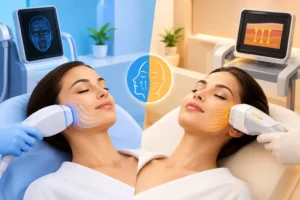
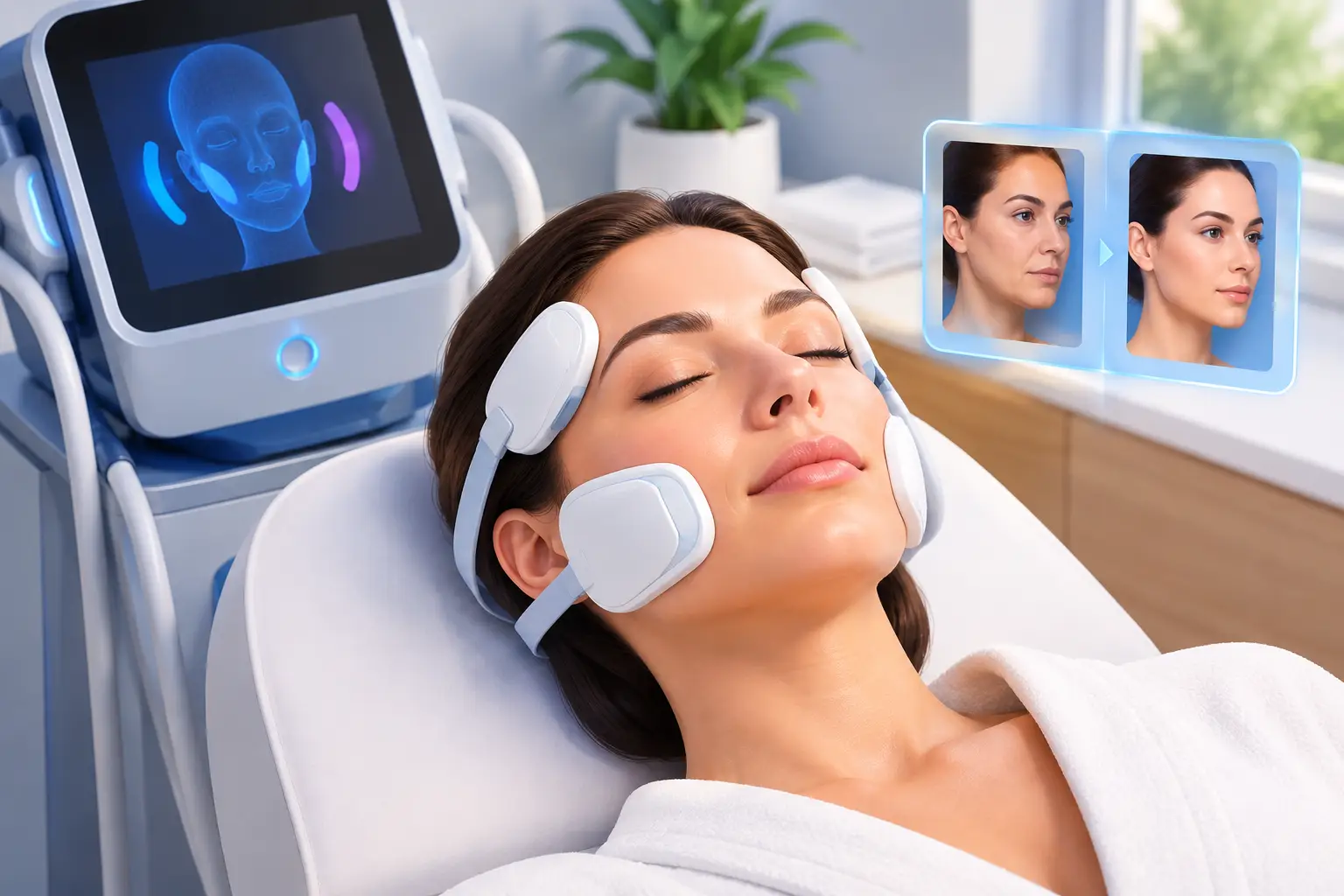
EMFACE combines two technologies in one short appointment: synchronised radiofrequency and high-intensity facial electromagnetic stimulation, often called HIFES. Applicators are placed on the forehead and cheeks. The radiofrequency warms the skin and underlying tissues, while the electromagnetic energy triggers repeated contractions in selected facial muscles.
That combination matters. Many non-surgical facial treatments focus largely on the skin surface or collagen in the dermis. EMFACE also targets the muscles that help support facial expression and contour. The aim is to improve the appearance of skin laxity, soften the look of wrinkles and create a subtly more lifted, rested appearance.
During treatment, you will feel warmth and a strong rhythmic tightening or tapping through the muscles. It can feel unusual during the first few minutes, especially around the forehead, but it should not be painful. There are no needles, no anaesthetic and no recovery period. Most appointments take around 20 minutes, making EMFACE practical for people who do not want visible redness, swelling or time away from work.
EMFACE treatment review: what results are realistic?
The best EMFACE results are usually described as refreshed rather than transformed. Clients may notice that their cheeks appear a little more elevated, their brow area looks more open, and fine lines seem less etched once the skin has had time to respond to the radiofrequency.
Results develop gradually. The muscle stimulation is working from the first session, but collagen and elastin renewal takes time. Many people begin to see a change a few weeks into their course, with the fuller outcome becoming clearer over the following two to three months. This makes EMFACE a good fit for someone planning ahead for a wedding, milestone birthday or holiday, rather than seeking a dramatic change by the weekend.
A standard course commonly involves four sessions, usually spaced several days to a week apart. Maintenance depends on your age, skin quality, muscle tone, lifestyle and goals. Some people choose periodic top-up sessions to sustain the result, particularly as natural collagen production and facial support change over time.
It is worth being candid about the limits. EMFACE cannot remove significant loose skin, replace lost facial volume or reshape a heavily descended face in the way surgery can. It will not erase deep static folds overnight. If volume loss is the main concern, skin-tightening alone may not create the balanced result you are hoping for. A personalised plan may instead combine EMFACE with medical-grade skincare, treatments for pigmentation or texture, RF microneedling, or injectables provided by an appropriately qualified practitioner.
Who is most likely to benefit?
EMFACE often suits adults who are beginning to see mild to moderate facial laxity and want a natural-looking option without needles. It can be particularly appealing if you feel your face looks tired, your cheeks have lost some definition, or your forehead and eye area seem less supported than before.
It is also a thoughtful option for clients who are not ready for injectable treatments, prefer to avoid downtime, or want to maintain results from a broader rejuvenation programme. Men and women can both benefit. Treatment settings and placement should be assessed for the individual face, rather than treating everyone to the same template.
Age alone is not the deciding factor. A person in their thirties with early laxity and a strong preference for prevention may be an excellent candidate, while someone in their fifties or sixties may still see a worthwhile improvement if their expectations are realistic. Skin condition, facial anatomy, degree of laxity and previous treatments all matter more than a number on a birthday card.
What does an EMFACE appointment feel like?
Your practitioner will cleanse the treatment area and position the applicators on the forehead and cheeks. Once the treatment starts, you will feel heat alongside repeated muscular contractions. The sensation is intense but brief and controlled. The face may visibly move with the contractions, which can feel a little strange at first, but there is no need to be alarmed.
Afterwards, you can generally return to normal activities straight away. There may be temporary warmth or mild redness, but this usually settles quickly. Unlike treatments that deliberately create controlled injury in the skin, EMFACE does not involve peeling, punctures or a prolonged healing phase.
A careful consultation still matters, even with a non-invasive treatment. Your practitioner should ask about your health history, any implanted electronic or metal devices, pregnancy, active skin conditions, recent facial procedures and your goals. EMFACE may not be suitable for everyone, particularly where certain medical implants or contraindications are present. Honest screening protects both your safety and your result.
How does EMFACE compare with other facial treatments?
EMFACE is often compared with injectables, RF microneedling and skin-tightening devices, but they do different jobs. Anti-wrinkle injections relax selected muscles to soften movement-related lines. EMFACE stimulates muscle activity and support, so the approach is very different. Dermal fillers restore volume and contour where volume has been lost, whereas EMFACE does not add volume.
RF microneedling can be particularly valuable for concerns such as acne scarring, enlarged pores, texture and more pronounced skin remodelling. It does involve needles and a degree of downtime, which may or may not suit your circumstances. EMFACE is gentler in terms of recovery and focuses more strongly on facial muscle stimulation alongside dermal heating.
For some clients, the question is not which treatment is best in isolation. It is which combination makes sense for their face, budget and tolerance for downtime. Treating pigmentation on sun-damaged skin, for example, may require skincare and a separate pigmentation plan before or alongside rejuvenation work. A lifted-looking cheek will not automatically address brown patches, redness, dehydration or acne scarring.
Is EMFACE worth the investment?
Whether EMFACE feels worthwhile comes down to your starting point and what you value. If you want a subtle, non-surgical lift with no needles and little disruption, it can be a compelling treatment. If you are expecting a facelift-level change, it is likely to disappoint.
The cost should be viewed as a course rather than a single appointment, because the recommended sessions work together. During a consultation, ask what is included, how many treatments are advised for your concern, when photographs will be reviewed and whether maintenance is likely. Be cautious of fixed packages offered without assessing your face first. More treatments are not automatically better, and the right plan should have a clear clinical reason behind it.
At Beautilase, an EMFACE consultation is an opportunity to discuss the changes you have noticed without pressure or judgement. Good aesthetic care begins with listening: whether your priority is a fresher brow, firmer cheeks, healthier skin quality or simply understanding your options.
If you are considering EMFACE, bring a clear picture of what you would like to improve and remain open to professional guidance on what can realistically achieve it. The most satisfying results tend to come from choosing a treatment that suits your face, rather than asking one treatment to do everything.