A firmer-looking forehead, a subtle lift through the cheeks, and softer-looking lines without needles can sound ambitious. So, does EMFACE build facial muscle? It can stimulate the muscles responsible for facial expression and support measurable changes in muscle quality and thickness over a treatment course. But it is not a face lift in a machine, and the best outcomes come from understanding exactly what it can – and cannot – do.
EMFACE is a non-invasive facial rejuvenation treatment that combines synchronised radiofrequency with HIFES, or high-intensity focused electrical stimulation. It treats both the skin and the underlying facial muscles in one appointment, with no injectables, surgery or recovery period. For people noticing early laxity, a less defined facial contour or a tired appearance, that combination is what makes it different.
Does EMFACE build facial muscle, or simply tone it?
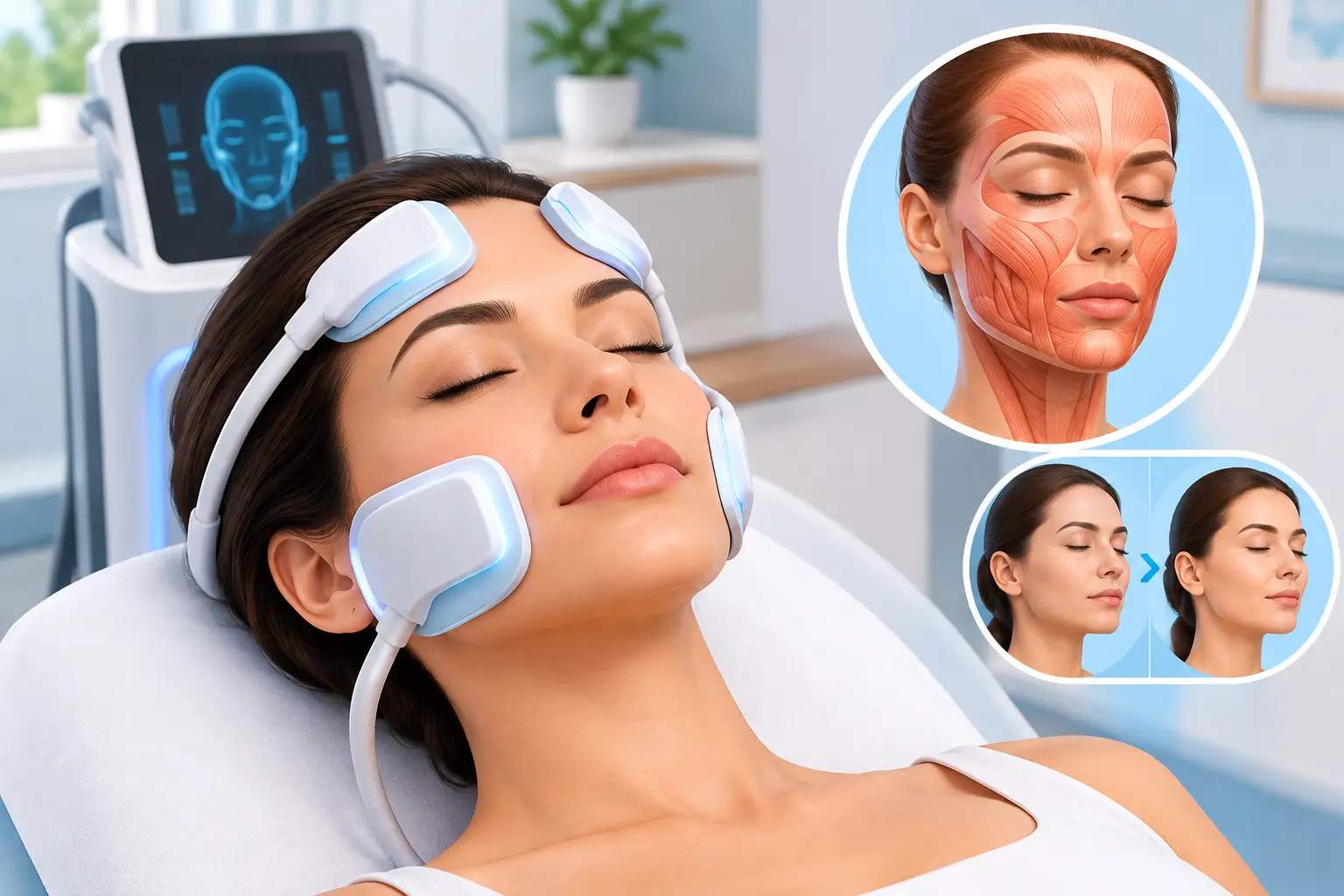
“Build” is a useful word, but it needs context. Facial muscles are small, specialised and constantly active. They are not trained in the same way as the larger muscles in your legs or arms. EMFACE uses HIFES energy to create repeated, supramaximal contractions in selected facial muscles, particularly the frontalis in the forehead and the zygomatic muscles in the cheek area. These contractions are stronger and more consistent than movements you could create deliberately in a mirror.
The aim is to condition and strengthen the muscle structure beneath the skin. Clinical studies on this technology have reported improvements in muscle thickness alongside improvements in lifting, facial volume and the appearance of wrinkles. That said, results vary between individuals, and “building muscle” should not be interpreted as creating dramatically larger cheeks or a visibly bulky forehead.
A more accurate expectation is improved support. When the muscles of the upper face and cheeks are better conditioned, they may provide a subtly lifted, fresher appearance. This can be particularly valuable where facial ageing is linked to a gradual loss of structural support rather than deep skin damage alone.
EMFACE also delivers radiofrequency energy to heat the dermis. This supports collagen and elastin remodelling, which can improve skin firmness and fine lines over time. The muscle stimulation and skin heating happen together, so the visible result is not solely due to facial muscle changes. It is the combination that matters.
How EMFACE works beneath the skin
During treatment, applicators are placed over the forehead and cheeks. Radiofrequency gently warms the skin while HIFES causes rhythmic contractions in the target muscles. You may see your brows lift slightly or feel the cheeks moving during the session. It can feel unusual at first, but it should not be painful.
The treatment generally takes around 20 minutes. There are no needles, numbing cream or downtime, so most clients return to work, errands or family life straight afterwards. Some temporary warmth or mild muscle tenderness is possible, much like the feeling after using a muscle in a new way, but this usually settles quickly.
A typical programme involves a course of four sessions, commonly scheduled about one week apart. Your body then needs time to respond. Muscle conditioning occurs through the treatment course, while collagen remodelling continues gradually afterwards. Many people begin to notice a fresher look within a few weeks, with changes becoming more apparent over the following two to three months.
What kind of changes can you realistically expect?
EMFACE is designed for natural-looking rejuvenation. The most common goals are a more open-looking eye area, a gentle brow lift, improved cheek support, softer forehead lines and a more rested overall appearance. Results should still look like you, not like a different face.
How visible those changes are depends on your starting point. Someone in their thirties or forties with early laxity and mild expression lines may see EMFACE as a useful way to maintain and strengthen facial support without injectables. Someone with more established skin laxity, significant volume loss or heavier jowling may benefit from EMFACE, but may need a broader treatment plan to achieve a meaningful result.
It is also worth being candid about what EMFACE does not replace. It does not remove excess skin, fill deep volume loss in the way dermal filler can, or alter the structure of the nose, jaw or bone. It cannot erase every wrinkle. If your concern is mostly pigmentation, acne scarring or uneven texture, treatments such as medical-grade skincare, peels, RF microneedling or pigmentation programmes may be more relevant to your goal.
This is why a personalised consultation matters. A treatment that is excellent for improving muscle support is not automatically the right answer for every sign of ageing.
EMFACE versus facial exercises
It is reasonable to ask whether facial exercises can offer the same effect. Purposeful facial movement may increase awareness of tension and expression habits, but it is difficult to consistently target deep facial muscles with sufficient intensity using exercises alone. Overworking some expressions can also reinforce lines in certain areas.
EMFACE is different because HIFES delivers controlled contractions to specific muscle groups while the radiofrequency component addresses the skin at the same time. It is a technology-led treatment, rather than a replacement for good daily habits. Sun protection, consistent skincare, adequate sleep and avoiding smoking still influence how your skin ages and how long any treatment result lasts.
Who may be a good candidate for EMFACE?
EMFACE can suit adults who want a non-surgical option for early to moderate facial ageing, especially if they are not ready for injectables or simply prefer a needle-free approach. It can appeal to both women and men who feel their face has begun to look less lifted, less defined or more fatigued, despite feeling well in themselves.
It can also be a thoughtful maintenance treatment for clients who already look after their skin and want to support their results over time. At Beautilase, we take the time to assess skin quality, facial movement, degree of laxity and your own preferences before recommending a plan. There is no value in selling a treatment that does not match the concern you actually want to address.
EMFACE is not suitable for everyone. Electrical stimulation and radiofrequency treatments may not be appropriate if you have certain implanted electronic devices, metal implants in the treatment area, active skin conditions, a current infection, or if you are pregnant. A full consultation and medical history are essential before treatment. If you have had recent aesthetic procedures, facial surgery or are managing a neurological condition, this should also be discussed openly.
How to make your EMFACE results last
Facial ageing continues, which means no treatment is permanent. After an initial course, maintenance sessions may help preserve the improvement in muscle support and skin firmness. The right interval depends on your age, skin condition, lifestyle and the result you wish to maintain.
Daily skincare has a role here too. Broad-spectrum SPF, a routine tailored to your skin, and active ingredients chosen carefully for concerns such as dehydration, pigmentation or fine lines can help protect the surface of the skin while EMFACE addresses deeper support. If you have pronounced texture changes or sun damage, pairing treatments at the right time may give a more balanced result than relying on one modality alone.
Avoid judging the outcome immediately after your final appointment. There may be a temporary post-treatment freshness, but the more meaningful changes are gradual. Taking consistent photographs in the same lighting before your course and again several weeks afterwards can be far more useful than trying to assess small day-to-day changes in the mirror.
The honest answer is that EMFACE can help build and condition facial muscle, but it works best when viewed as part of a considered approach to facial ageing. If you want a natural lift without needles or downtime, a consultation can clarify whether your facial anatomy, skin concerns and expectations make it the right next step.