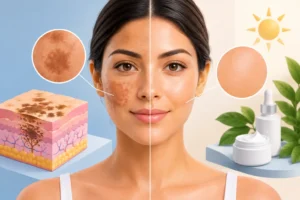

A patchy complexion can be frustrating because it rarely has one simple cause. Uneven complexion treatment results depend on whether you are dealing with sun spots, post-acne marks, melasma, facial redness, rough texture, or several concerns at once. The most useful question is not “What is the strongest treatment?” but “What is causing my skin to look uneven, and what can safely improve it?”
At Beautilase, that distinction shapes every treatment plan. A treatment that works beautifully for isolated brown sun damage may be the wrong choice for hormonally driven melasma, reactive redness, or deeper skin tones prone to post-inflammatory pigmentation. Honest advice at the start protects both your skin and your expectations.
What uneven complexion treatment results can realistically look like
Successful treatment does not always mean a completely uniform, filtered-looking face. Healthy skin has natural variation in colour and texture. A good result is usually skin that looks clearer, calmer and more even overall, with less contrast between darker patches, marks, redness and the surrounding skin.
For some people, the first visible change is brightness and smoother texture. For others, pigmentation gradually softens over a series of appointments and a consistent home routine. Melasma often responds well but requires maintenance, because sunlight, heat, hormones and inflammation can reactivate it. This is not a failure of treatment. It is the nature of a condition that needs ongoing management rather than a one-off fix.
Results also take time. Skin needs to settle after professional exfoliation, microneedling or pigment-focused laser treatment. A temporary darkening of treated pigment, mild flaking, dryness or redness can be part of the healing process when it has been anticipated and managed correctly. The aim is progressive improvement without pushing the skin into unnecessary irritation.
First, identify what is making the skin look uneven
“Uneven tone” is a description, not a diagnosis. Brown marks may be freckles, age spots, sun damage, post-inflammatory hyperpigmentation or melasma. Pink or red areas may relate to sensitivity, rosacea, acne inflammation or visible blood vessels. Dullness and shadowing can come from dehydration, dead skin cell build-up, enlarged pores or acne scarring.
This matters because pigment-producing cells react to irritation. If treatment is too aggressive for your skin, inflammation can create new discolouration, particularly in skin that tans easily or has a history of marks lingering after spots. A personalised assessment considers your skin type, medical history, current skincare, sun exposure, hormones, previous treatments and how your skin has healed in the past.
It is also worth being candid about the trigger. If you are still regularly getting sun exposure without reliable daily protection, picking active acne, using irritating products, or experiencing hormonal changes, those factors can limit progress. There is no judgement in this conversation. It simply helps us create a plan that fits real life.
Which treatments may improve uneven skin tone?
The best route depends on the concern, downtime preferences and how quickly your skin can safely be treated. In many cases, combining carefully chosen clinic treatments with medical-grade skincare gives more dependable results than relying on either alone.
Professional peels for surface dullness and marks
Medical-grade peels can improve surface texture, congestion, dullness and certain forms of pigmentation by encouraging controlled skin renewal. They may be a good starting point for post-acne marks and a lacklustre complexion, particularly when a gradual approach is preferable.
A peel is not meant to leave everyone dramatically shedding. Some clients experience visible flaking, while others notice a fresher look with little peeling. Stronger is not automatically better. The right formulation, preparation and spacing between sessions matter more than chasing obvious downtime.
Pigmentation programmes for stubborn or widespread discolouration
For concerns such as melasma or more diffuse pigmentation, a structured programme such as Dermamelan or Cosmelan may be recommended after a thorough consultation. These plans typically combine in-clinic application with a prescribed homecare phase and strict sun protection.
Commitment is part of the result. The early period can involve dryness, redness and peeling, and the home routine needs to be followed closely. When appropriate for your skin, this approach can create a meaningful reduction in the appearance of persistent pigmentation, but maintenance remains essential.
Laser treatment for selected pigment concerns
Laser technology can be highly effective for clearly defined sun spots, freckles and some forms of superficial pigmentation. However, not every dark patch should be treated with laser. Melasma can worsen with unsuitable heat-based treatment, and darker skin tones need particularly careful device settings and treatment selection.
A reputable clinic will not promise to erase every mark in one session. They should explain whether a patch test is appropriate, how many sessions may be needed, what healing looks like and the possibility of pigment returning. This is careful practice, not hesitation.
RF microneedling for texture alongside tone
When uneven complexion is partly caused by acne scarring, enlarged pores or crepey texture, RF microneedling may support smoother-looking skin while stimulating collagen remodelling. It is often a gradual treatment, with changes developing over weeks and months as the skin renews itself.
It may not be the first choice for active melasma or highly reactive skin. Timing matters. Sometimes calming inflammation and stabilising pigment first produces a better foundation for texture-focused treatment later.
Why treatment results vary from person to person
Social media makes skin correction look instant and identical. In clinic, the outcome is more individual. The depth and type of pigmentation, your natural skin tone, current inflammation, hormones, sun habits and product use all influence response.
Your starting point matters too. Recent post-acne marks may fade more readily than pigmentation that has accumulated over many years. A person with both rosacea and brown sun damage may need their redness managed before introducing more active pigment treatments. Someone preparing for an event may choose a lower-downtime approach, accepting that the changes will be more gradual.
There is also a difference between improvement and permanence. Sun spots removed with suitable laser treatment can clear well, but new spots may develop with future UV exposure. Melasma can fade considerably and still recur. A realistic plan includes a maintenance strategy, not just the first course of treatment.
How to protect your progress between appointments
Professional treatments are only part of the picture. The daily choices that follow are often what preserve the result. Consistent broad-spectrum SPF, reapplied when needed, is non-negotiable for pigmentation-prone skin. Hats, shade and sensible heat exposure also make a genuine difference, particularly for melasma.
Use the products recommended for your skin rather than adding several new acids, scrubs or retinoids at once. Over-exfoliation can weaken the skin barrier, trigger sensitivity and make uneven tone more noticeable. If you experience stinging, persistent redness, swelling, blistering or unexpected darkening after treatment, contact your practitioner rather than trying to correct it yourself with more active products.
Photographs taken in the same lighting, without make-up, can be more helpful than checking the mirror every day. They make slow, meaningful changes easier to see and allow your practitioner to adjust the plan based on your skin’s response.
When to seek a personalised plan for uneven complexion treatment results
If pigmentation is changing rapidly, looks unusual, bleeds, becomes raised, or is accompanied by concerning symptoms, seek medical assessment before cosmetic treatment. Aesthetic treatment should only begin once any medical concern has been appropriately reviewed.
For established uneven tone, a consultation gives you the space to discuss what is bothering you without being sold a standard package. You should leave knowing what your likely treatment options are, the expected timeline, the cost and downtime involved, and what result is realistic for your skin.
Clearer, more even-looking skin is often built through thoughtful decisions made over time. The right plan respects your skin’s limits while giving it every reasonable opportunity to improve.