A treatment that promises tighter, smoother skin can sound simple until you are choosing between two very different ways of creating change. In the discussion around RF microneedling versus plasma, the right answer is rarely whichever treatment is newest, strongest, or has the shortest social-media video. It is the treatment that matches your skin concern, skin tone, tolerance for downtime, and the degree of improvement you can realistically expect.
Both treatments work by creating controlled injury to encourage the skin’s natural repair response. That can support collagen renewal, improve texture and soften selected lines or scars. However, where the energy goes, how the skin heals, and who is best suited to each option are not the same.
RF microneedling versus plasma: the key difference
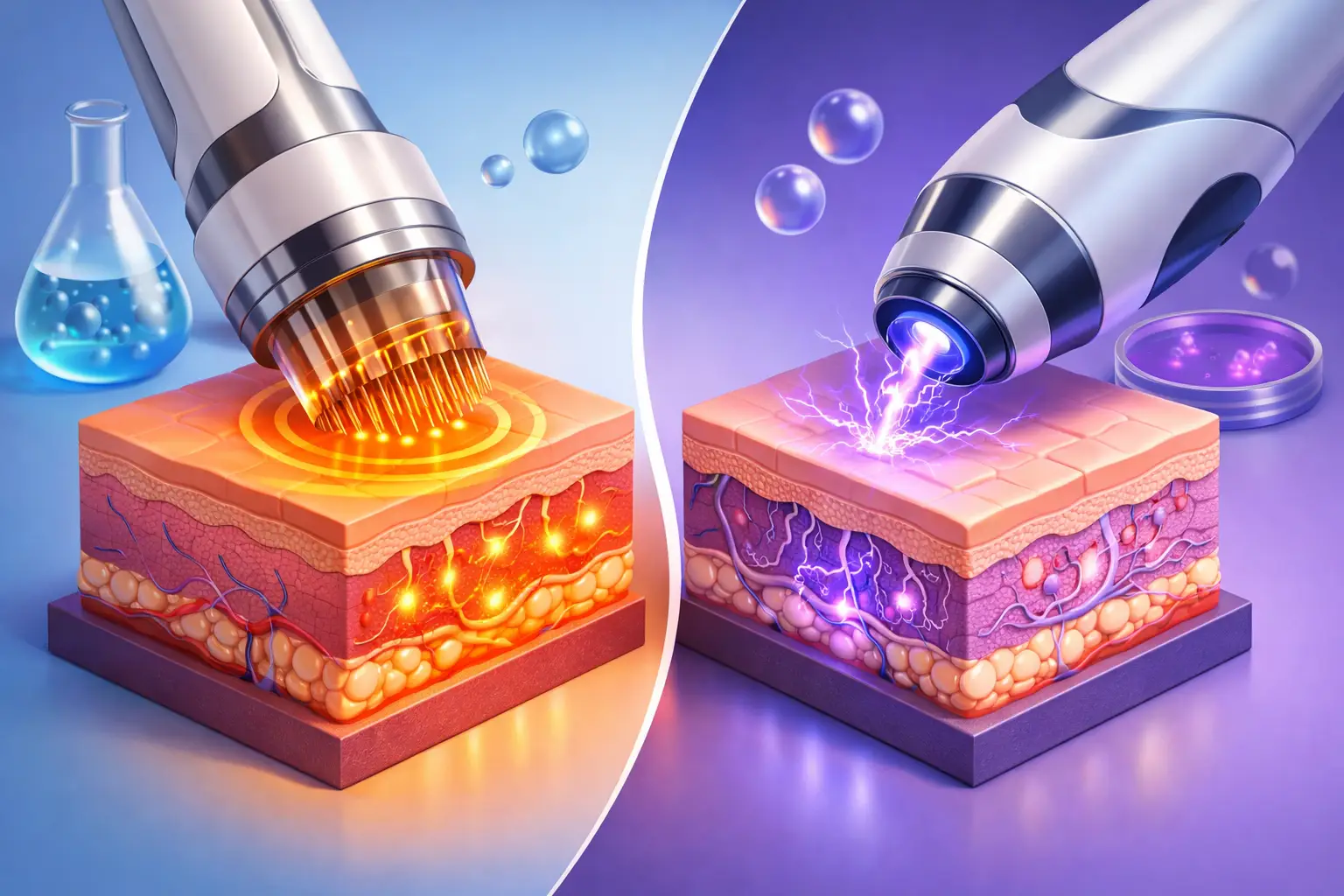
RF microneedling combines very fine, insulated or non-insulated needles with radiofrequency energy. The needles create tiny channels at a selected depth, while RF energy is delivered into the deeper layers of the skin. This controlled heat stimulates collagen and elastin remodelling without relying solely on surface injury.
Plasma fibroblast treatment, often called plasma skin tightening, works at the skin’s surface. A handheld device creates a small electrical arc above the skin, ionising the air to form plasma. This creates tiny, deliberate points of superficial thermal injury. The result is a pattern of small carbon crusts that lift away as the area heals.
In practical terms, RF microneedling is usually chosen for broader concerns involving texture, pores, acne scarring and early skin laxity. Plasma is more commonly considered for very targeted tightening, particularly in delicate areas where a small amount of skin contraction may be helpful, such as selected lines around the eyes or mouth. Neither is a substitute for surgery when there is significant loose skin.
What concerns does RF microneedling treat best?
RF microneedling is a versatile option when the issue is not just on the surface. It can be used on the face and, depending on the device and treatment plan, areas of the body affected by acne scars, enlarged pores, fine lines, uneven texture, stretch marks and mild laxity.
The adjustable needle depth is a meaningful advantage. Acne scars, for example, may need treatment at a different depth from fine lines on the cheeks or a crepey jawline. Radiofrequency energy also adds a thermal stimulus that ordinary microneedling does not provide, which may be useful when collagen support is a key goal.
Most people need a course rather than one appointment. Skin remodelling is gradual, so improvements often build over several months. This is not a drawback, but it does require patience and a treatment plan that may include medical-grade skincare, pigment management or other procedures where appropriate.
Downtime after RF microneedling
Expect redness, warmth and mild swelling immediately afterwards, much like a strong sunburn. For many clients, this settles noticeably within one to three days, although the skin can feel dry or slightly rough for longer. Depending on the treatment intensity and your skin’s response, it is sensible to plan a few quiet days before an important event.
Aftercare matters. Skin should be treated gently, protected carefully from sun exposure and supported with practitioner-recommended products. Picking, exfoliating too soon, hot exercise sessions and active skincare can all interfere with recovery.
Where plasma fibroblast can be a better fit
Plasma treatment is highly targeted. It may suit someone with a small, localised area of laxity who understands the visible healing process and is happy to have a more obvious period of downtime. The pinpoint crusting can make it less appealing before work events, weddings or holidays, but it can be useful when treating a focused concern rather than the whole face.
The upper eyelid area is often where plasma attracts attention, particularly from clients who want a non-surgical option. It is important to be candid here: plasma may create subtle tightening in carefully selected cases, but it cannot recreate the outcome of an eyelid lift for significant hooding or excess skin. A responsible consultation should make that distinction clear.
Plasma may also be considered for fine, etched lines and selected textural concerns. Results vary according to the area, the degree of laxity, the device used, the practitioner’s technique and how well aftercare is followed.
Downtime after plasma treatment
Plasma generally has more visible downtime than RF microneedling. The small dark crusts can remain for around five to 10 days, sometimes longer depending on the area and individual healing. Swelling can be pronounced around the eyes for the first few days.
Those crusts must be left alone. Removing them early increases the risk of scarring, infection and pigmentation changes. Sun protection is essential during healing and beyond it, as fresh skin is particularly vulnerable to post-inflammatory pigmentation.
Skin tone and pigmentation risk matter
This is one of the most important parts of the comparison. Any procedure that intentionally injures the skin can trigger post-inflammatory hyperpigmentation, especially in skin that tans easily or has a history of melasma, dark marks after spots, or pigmentation following previous treatments.
Because plasma creates visible surface injury, pigmentation risk needs particularly careful assessment. It is not the ideal option for every skin tone or every pigmentation-prone client. A practitioner should ask about your skin’s healing history, current skincare, sun exposure, hormonal pigmentation and previous procedures before recommending it.
RF microneedling can often be tailored more cautiously across a wider range of skin types, but it is not risk-free. Energy levels, needle depth, treatment frequency and pre- and post-treatment skincare need to be selected properly. Darker skin is not a reason to dismiss advanced treatments, but it is a reason to choose them thoughtfully.
Is one treatment more painful?
Both can be uncomfortable without adequate numbing, particularly in sensitive areas. Topical anaesthetic is commonly used, and your practitioner should explain what you are likely to feel before treatment begins.
During RF microneedling, people often describe pressure, heat and a prickling sensation. Plasma tends to feel sharper and more localised, with heat at each treatment point. Pain tolerance differs enormously, so the more useful question is whether the expected result and recovery period feel worthwhile for you.
How to choose between RF microneedling and plasma
If your priority is overall texture, acne scarring, enlarged pores, early laxity or collagen support across a larger area, RF microneedling is often the more logical starting point. It usually offers less obvious downtime and can be integrated into a longer-term skin programme.
If you have a small, specific area that may benefit from superficial tightening and you can commit to careful healing and visible downtime, plasma may be considered after a thorough suitability assessment. It is not automatically the “stronger” treatment simply because it produces crusting.
A good consultation goes beyond looking at one line or fold in isolation. Your practitioner should consider your skin type, pigmentation history, active acne or infection, tendency to form raised scars, medical history, medications, upcoming plans and expectations. Pregnancy, certain implanted electrical devices, active skin conditions and recent sun exposure may affect whether treatment should be postponed or avoided.
At Beautilase, we believe the best treatment plan is one you understand and feel comfortable with. Sometimes that means RF microneedling. Sometimes plasma is appropriate. Sometimes the safest, most effective route is to prepare the skin first, treat pigmentation or acne, or choose an alternative entirely.
The most helpful next step is a personal consultation rather than choosing from before-and-after photos alone. When your skin is assessed properly, you can invest in a treatment that respects both your goals and the way your skin needs to heal.