Those tiny carbon crusts after a plasma fibroblast treatment can look more dramatic than clients expect, particularly around the eyes. A clear plasma pen healing timeline guide helps you plan the social downtime, care for the area without overdoing it, and recognise the difference between expected healing and a reason to contact your practitioner.
Plasma fibroblast treatment creates controlled micro-injuries on the skin’s surface using plasma energy. This initiates a healing response that may support skin tightening and texture improvement over time. Your treatment settings, treatment area, skin tone, medical history and aftercare all influence recovery, so the dates below are useful guideposts rather than a fixed promise.
Plasma Pen Healing Timeline Guide: Day by Day
Treatment day: redness, swelling and pinpoint crusts
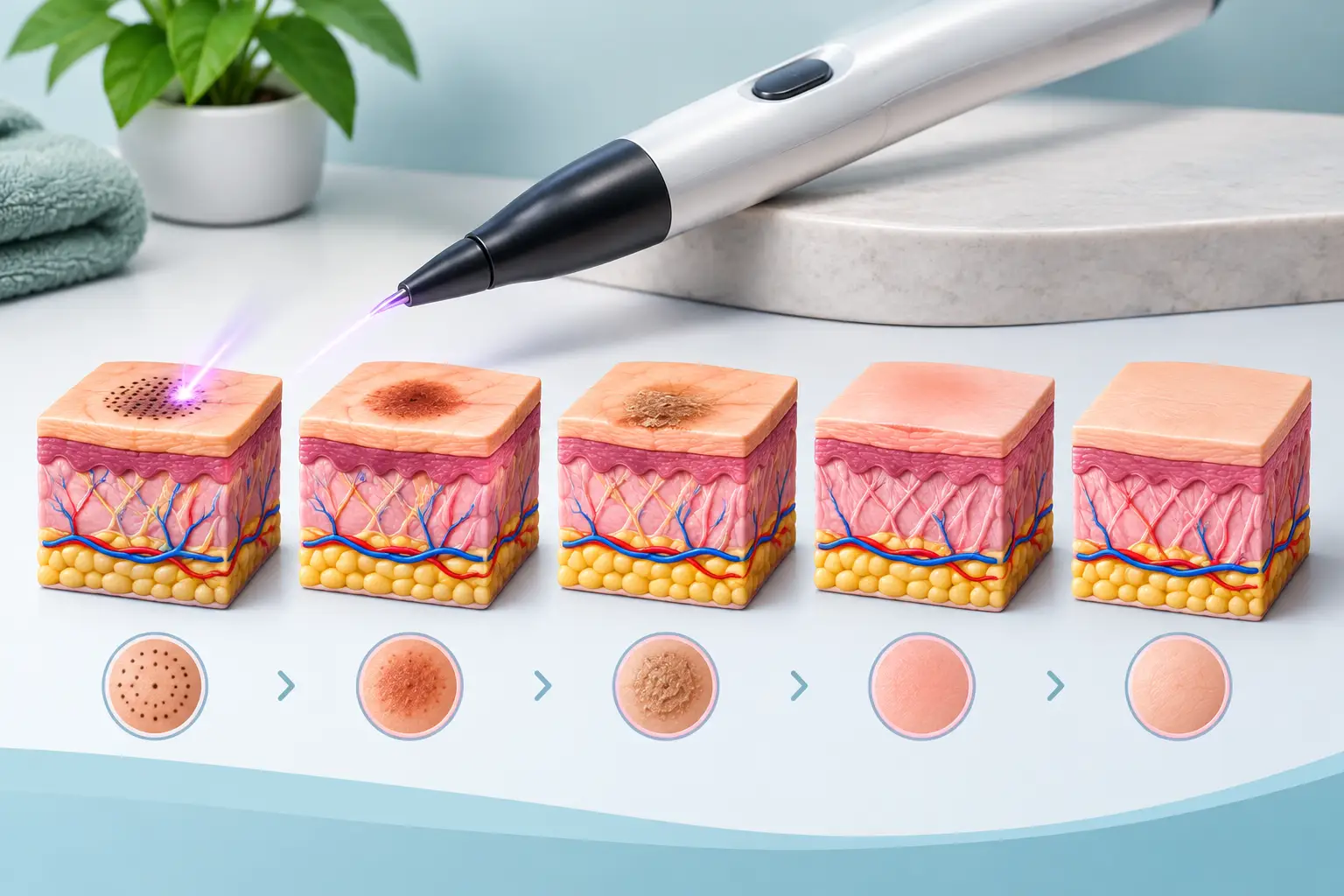
Immediately after treatment, the skin usually looks red and feels warm, similar to a strong sunburn. Small brown or dark dots, often called carbon crusts, form at each treatment point. Swelling is especially common when the upper or lower eyelids have been treated. It can be more noticeable the morning after your appointment than it was when you left the clinic.
Keep the area clean and dry in line with your practitioner’s instructions. Do not rub, scratch or apply unapproved creams, oils or make-up. A cool compress may be recommended for swelling, but it should never be placed directly onto freshly treated skin or used for long periods.
Days 1 to 3: the peak swelling phase
For many people, swelling peaks during the first 24 to 72 hours. The area can feel tight, tender or itchy, and the crusts begin to look more defined. Eyelid treatments may cause puffiness that makes the eyes appear partially closed for a day or two. This is inconvenient, but can be within the expected recovery pattern.
Sleep with your head elevated where possible and avoid strenuous exercise, hot showers, saunas, steam rooms and alcohol if these have been advised against. Heat and increased circulation can make redness and swelling linger. It is also wise to schedule treatment away from an important event rather than assuming you will be fully camera-ready within a few days.
Days 4 to 7: crusts dry and start lifting
The dots usually become drier and darker before they shed. This is the stage that tests patience. They may feel itchy, and it is tempting to help loose crusts along, particularly if you have treatment around the mouth or brow area. Please do not pick them.
Removing crusts before they are ready can prolong redness and raises the risk of scarring or post-inflammatory hyperpigmentation. Let them detach naturally, even if the skin underneath looks ready. Your practitioner may advise a specific healing balm or post-treatment product. Use only what has been recommended, in the amount advised.
For many clients, most facial crusts shed between days five and 10. Larger areas, more intensive settings and body treatments can take longer.
Days 7 to 14: fresh pink skin appears
Once the crusts have lifted, new skin may look pink, red or lighter than the surrounding area. It can still feel delicate and occasionally itchy. This is not the moment to restart acids, retinoids, exfoliating scrubs, strong vitamin C products or fragranced skincare.
Sun protection becomes particularly important once the surface has fully healed and your practitioner says it is appropriate to apply it. Daily broad-spectrum SPF 50+ and physical sun avoidance, including hats and shade, help reduce the chance of uneven pigment developing. Auckland’s UV levels can be high even on overcast days, so this is not an afterthought.
You may be able to wear make-up after the crusts have shed and the skin is intact, but follow the aftercare plan provided for your treatment. Clean brushes and gentle removal matter. If make-up stings, stop using it and give the skin more time.
Weeks 2 to 6: quiet repair beneath the surface
The visible recovery may be largely complete, but deeper skin remodelling is still underway. Mild lingering pinkness can be normal, particularly on fair or sensitive skin and after treatment around the eyes. Some people notice an early tightening effect, while others see little change at this stage. Neither response predicts the final result on its own.
Resist the urge to judge plasma fibroblast treatment too soon. Collagen-related changes develop gradually, and improvement is often assessed over eight to 12 weeks. In some cases, a second treatment is discussed only after the skin has had adequate time to recover and your practitioner can assess the response properly.
What Changes the Plasma Pen Healing Timeline?
Plasma healing is not one-size-fits-all. Treatment intensity and location matter: the thin skin around the eyes tends to swell more, while areas with more movement, such as around the mouth, may take longer to feel settled. Treating a small cluster of lines is different from treating a broader area of laxity or acne scarring.
Your natural skin response also matters. People prone to pigment changes, keloid or hypertrophic scarring, cold sores, eczema flares or delayed wound healing need a careful assessment before proceeding. Darker skin tones can have a higher risk of post-inflammatory hyperpigmentation with some energy-based treatments. This does not automatically rule out treatment, but it does mean that conservative settings, pre-treatment preparation or an alternative treatment may be the safer choice.
Smoking, sun exposure, picking and using active skincare too early can all compromise healing. On the other hand, following aftercare precisely does not guarantee an identical recovery to someone else’s. Good care lowers avoidable risks; it cannot remove individual biological variation.
Aftercare That Protects Your Result
Your practitioner’s written instructions should always take priority, as protocols differ by device, treatment depth and area. The essentials are simple: leave crusts alone, avoid heat and friction, keep hands away from the area, and protect healed skin from UV exposure.
Avoid booking plasma treatment immediately before a holiday, wedding, work presentation or professional photoshoot. Even when crusts are gone by day seven, residual redness may be visible for several weeks. Giving yourself a two-week minimum social buffer for a light facial treatment is sensible; a longer buffer may be preferable for more intensive work or if you have a history of slow healing.
It is equally important not to layer multiple treatments too close together. Chemical peels, microneedling, laser procedures and strong home actives can all be valuable in the right plan, but freshly treated skin needs time. A personalised plan prevents well-intentioned skincare from becoming irritation.
When to Contact Your Practitioner
Some tenderness, redness, swelling and itchiness are expected. However, get in touch promptly if symptoms are worsening rather than easing, or if you are unsure. Seek professional advice for:
- increasing pain, heat, spreading redness or significant swelling after the first few days
- yellow or green discharge, an unpleasant smell, fever or feeling generally unwell
- blisters, a rash, severe burning or an allergic-looking reaction
- crusts that have been accidentally removed and are bleeding or weeping
- persistent, pronounced pigment change or any concern about scarring.
Do not try to treat a suspected infection with leftover creams or conceal it with make-up. Early, professional guidance is kinder to your skin and usually easier to manage than waiting.
Planning Treatment With Your Skin in Mind
A proper consultation is where the safest plasma pen journey begins. Your practitioner should ask about your skin history, medications, previous scarring, pigmentation tendencies and the result you are hoping to achieve. Honest conversations matter here: plasma fibroblast can be a useful option for selected concerns, but it is not the best treatment for every line, scar or area of loose skin.
At Beautilase, treatment planning is based on the skin in front of us, not a standard package. Sometimes that means discussing plasma fibroblast; sometimes RF microneedling, medical-grade skincare, pigmentation management or another approach offers a more suitable route.
Give your skin the same patience you would give any healing process. Protect it, avoid comparing day-five recovery with someone else’s day-five photo, and ask for advice early when something does not feel right.