
Crepey skin can make areas such as the neck, chest, upper arms, knees and under-eyes look finely wrinkled, thin or less supported, even when you otherwise feel well in your skin. The most effective crepey skin treatment choices are rarely about one miracle product or a single appointment. They depend on why the skin has changed, where it is on the body, how much laxity is present and how much downtime you are comfortable with.
At Beautilase, we take a considered approach. A treatment should suit your skin, lifestyle and goals, not simply be the newest option on the menu. For some people, a consistent medical-grade skincare routine is the right starting point. For others, collagen-stimulating technology such as RF microneedling can offer a more meaningful improvement in texture and firmness.
Why skin becomes crepey
Crepey texture is usually linked to a gradual loss of collagen, elastin and hydration. These are the structures that help skin feel springy, smooth and supported. As they reduce with age, sun exposure, hormonal changes, weight loss, smoking, illness or genetics, the skin may appear thinner and less resilient.
Sun damage is a major contributor, especially on the décolletage, forearms and hands. Repeated UV exposure breaks down collagen over time, often long before the change becomes obvious. Menopause can also accelerate the process, as falling oestrogen levels affect skin thickness, hydration and elasticity.
This is why treatment needs to be realistic. A moisturiser can improve surface dryness and make skin look temporarily plumper, but it cannot tighten significant loose skin. Conversely, an advanced treatment may stimulate new collagen, but it cannot recreate the level of lift achieved through surgery where there is substantial excess skin. Good advice begins with being clear about that difference.
Crepey skin treatment choices: what each option can do
Medical-grade skincare for daily support
A well-chosen homecare routine is the foundation of almost every crepey-skin plan. It supports the skin barrier, improves hydration and helps protect the collagen you still have. This matters whether you are treating a mild texture change or maintaining results after clinic treatments.
Ingredients may include retinoids to encourage cell turnover and collagen activity, peptides for skin support, antioxidants such as vitamin C, and hyaluronic acid or other humectants to draw water into the skin. Rich barrier-supporting moisturisers can make a visible difference where dryness is exaggerating fine lines.
Daily broad-spectrum SPF is non-negotiable, particularly for the face, neck, chest and arms. It will not reverse established crepiness on its own, but it helps prevent further UV-driven collagen breakdown and protects the investment you make in treatment.
Skincare works best for early crepiness, dryness and prevention. Results are gradual and depend on consistency. Sensitive skin, rosacea-prone skin and areas such as the neck may need a slower introduction to active ingredients, particularly retinoids.
RF microneedling for texture and mild laxity
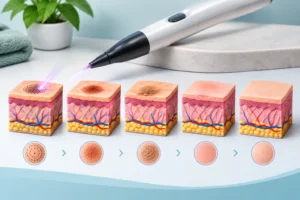
RF microneedling combines precise microneedling with radiofrequency energy delivered within the skin. The controlled treatment encourages the skin’s natural repair response, stimulating collagen and elastin production at a deeper level than topical skincare can reach.
It can be an excellent option for crepey texture, fine lines, enlarged pores and mild skin laxity on areas such as the face, neck, décolletage, arms and knees. The goal is not to pull the skin tight overnight. It is to improve density, texture and firmness progressively as new collagen forms.
Most people need a course of treatments, usually spaced several weeks apart, followed by maintenance as appropriate. You may experience redness, warmth and mild swelling afterwards, with downtime varying according to treatment intensity and the area treated. Results develop over weeks and months rather than days.
RF microneedling is often a strong middle ground for someone who wants more than skincare but does not want surgery. However, it may not be the ideal first choice if skin is very inflamed, actively infected, prone to problematic scarring or recently tanned. A proper consultation helps determine safe settings and timing.
Plasma fibroblast for selected areas
Plasma fibroblast treatment uses a targeted plasma arc to create tiny, controlled points on the skin’s surface. This triggers a healing response and can help tighten and improve the appearance of lax, crepey skin in carefully selected areas.
It is often considered for delicate concerns such as fine lines around the eyes, upper eyelid hooding, lines around the mouth and small areas of loose skin. It can be particularly appealing when someone is looking for a non-surgical option but wants a more visible tightening effect than skincare alone can offer.
The trade-off is downtime. Tiny crusts form as part of the normal healing process and must be allowed to shed naturally. Strict aftercare and sun avoidance are essential, particularly for anyone with a history of post-inflammatory hyperpigmentation. Plasma fibroblast is not suitable for every skin tone or concern, so an honest assessment is crucial rather than treating it as a universal answer.
Medical-grade peels when dullness is part of the picture
Crepey skin often looks worse when there is surface roughness, pigmentation or a build-up of dull, uneven cells. Medical-grade peels can improve brightness, smoothness and overall skin quality, making the skin appear fresher and more refined.
A peel is generally not a standalone tightening treatment. It is better viewed as part of a wider plan, especially where sun damage and uneven tone sit alongside fine lines. The right peel, preparation and aftercare matter because over-treating compromised skin can lead to irritation rather than improvement.
Treating pigmentation alongside texture
Sun-damaged crepey skin may also show freckles, age spots or patchy pigmentation. Addressing uneven pigment can make the area look more even and healthier, even before firmness changes become noticeable. Depending on the concern and skin type, this may involve a targeted skincare programme, medical-grade peels or a pigmentation-focused plan.
Texture and pigmentation do not always need the same treatment, which is another reason a personalised plan is more useful than choosing a procedure from a checklist. Treating one concern too aggressively while neglecting the other can leave you disappointed with the overall result.
Choosing the right plan for the area you want to treat
The face, neck, arms and body do not respond in exactly the same way. Facial skin may tolerate a different approach from the thin skin of the neck or chest. Upper arms may have crepiness related to both sun damage and loss of underlying volume, while knees can show movement-related lines as well as laxity.
Your ideal plan also depends on whether your concern is mainly dryness, fine textural lines, pigment, mild laxity or genuine excess skin. For example, consistent skincare and a peel may be enough for early chest crepiness. RF microneedling may be more appropriate when the same area has lost firmness. If there is marked hanging skin after significant weight loss, a surgical opinion may be the most honest option.
During consultation, we look at skin quality, skin tone, medical history, current products, previous treatments and your tolerance for downtime. We also discuss what success looks like to you. Some clients want subtle, natural-looking improvement with little interruption to daily life. Others are happy to allow for healing if it may provide a stronger result.
How to protect and maintain your results
Collagen-building treatments work with your body, so maintenance is part of the process. Skin continues to age, and lifestyle still influences how well it holds its structure. Sun protection, regular moisturising, adequate protein, avoiding smoking and managing active skin irritation all support better long-term skin quality.
It also helps to avoid constantly changing products or booking treatments too close together without a clear plan. Skin needs time to respond. Photography under consistent lighting can be useful for tracking gradual progress, because changes in firmness are often easier to see over several months than from one week to the next.
Crepey skin is common, and it is not something you need to feel embarrassed about. The right choice is the one that respects your skin, your budget and your appetite for downtime, while giving you a realistic path towards smoother, stronger-looking skin.