
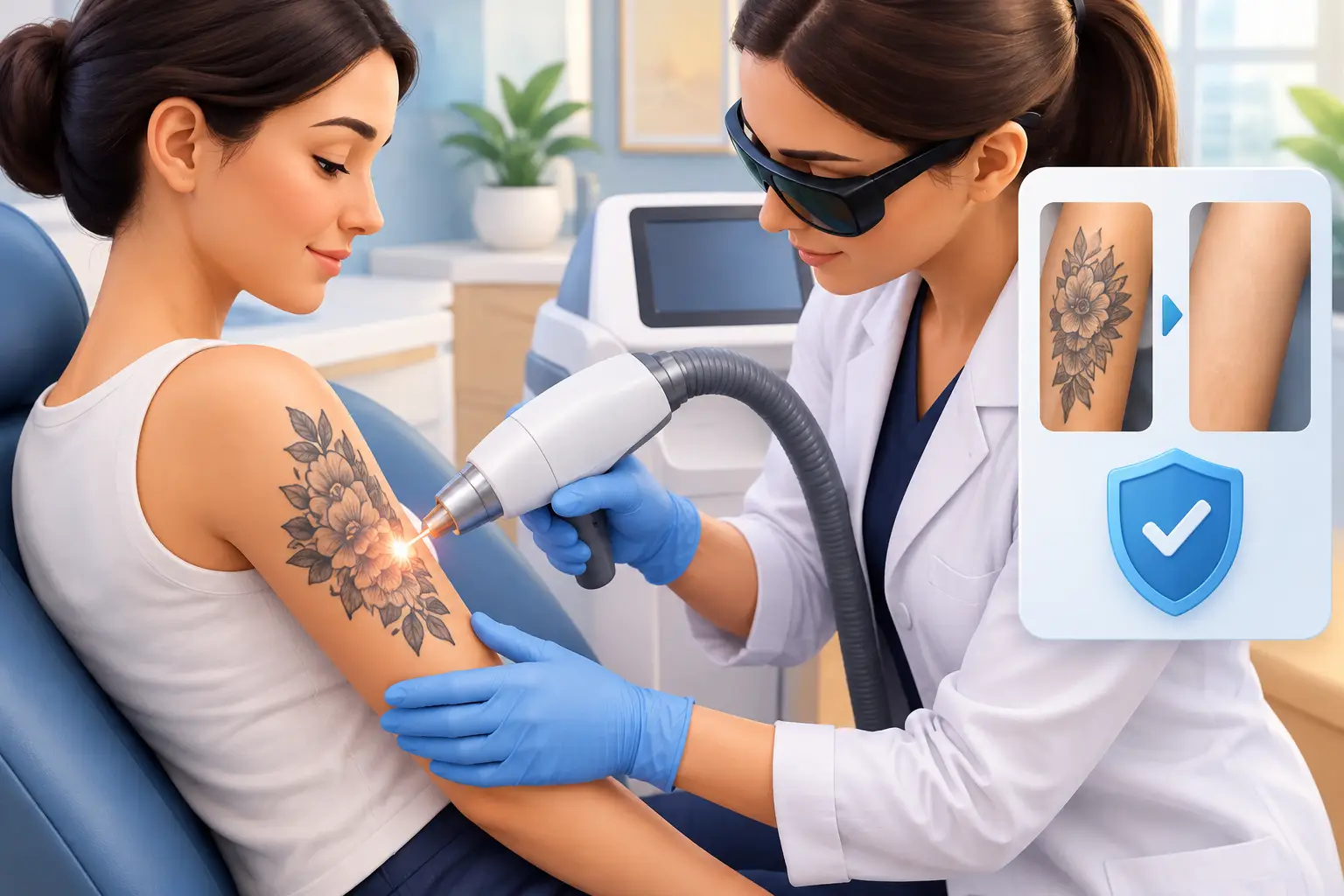
A tattoo that no longer feels like you can be surprisingly heavy to carry. Whether it marks a past relationship, an old career choice or simply a style that has changed, the first question is usually practical: is tattoo removal safe? For most suitable clients, laser tattoo removal can be performed safely when it is carefully assessed, professionally delivered and supported with the right aftercare. It is not risk-free, though, and honest advice matters more than promising a flawless result.
At Beautilase, we believe you should understand what treatment involves before deciding whether it is right for your skin, your tattoo and your goals.
Is tattoo removal safe with laser treatment?
Laser tattoo removal uses focused light energy to target pigment within the skin. The energy breaks tattoo ink into smaller particles, allowing the body’s immune system to gradually clear them over the weeks following treatment. The laser is selected and adjusted according to the ink colours, the tattoo’s depth and density, and your skin type.
When the correct technology and settings are used by a trained practitioner, the procedure has a well-established safety profile. However, “safe” does not mean painless, instant or identical for everybody. Tattoo removal is a process of controlled skin injury, and your skin needs time to recover between sessions.
The safest approach begins before the first laser pulse. A proper consultation should look at the tattoo itself, your skin tone and sensitivity, your medical history, current medications, healing history and any tendency towards pigmentation changes or raised scarring. This is particularly valuable for deeper skin tones, where reducing the risk of post-inflammatory hyperpigmentation requires considered settings and treatment planning.
What does laser tattoo removal feel like?
Most people describe laser removal as a fast snapping or flicking sensation, often compared with a hot elastic band against the skin. The feeling is brief because treatment is usually quick, but comfort still matters. Cooling methods can help protect the skin and make the session more manageable.
Immediately afterwards, the treated area may look white or frosted, then become red, warm and mildly swollen. Pinpoint bleeding, tenderness and temporary blistering can occur, particularly with dense professional tattoos. These reactions can look alarming if you are not expecting them, but they are commonly part of the skin’s short-term response to treatment.
You should be able to return to normal daily activities, but the area needs careful protection. Avoid friction, swimming pools, spas, intense exercise that causes heavy sweating, and direct sun exposure while the skin is healing. Your practitioner should give you clear, personalised aftercare rather than a vague instruction to “keep it clean”.
The real risks to consider
A responsible clinic will talk about risks plainly. Most side effects settle with appropriate care, but complications can happen. The chance of them increases when treatment is rushed, performed with unsuitable settings, or followed by poor aftercare.
Temporary redness, swelling, itching, crusting and blisters are among the more common reactions. Less common risks include infection, changes in skin colour, texture changes and scarring. Skin can become lighter than the surrounding area, known as hypopigmentation, or darker, known as hyperpigmentation. These colour changes are often temporary, but not always.
There is also a small possibility that the tattoo will not clear completely. Black and dark blue inks tend to respond well, while greens, light blues, yellows and white pigments can be more resistant. Some cosmetic tattoos and inks containing iron oxides may darken before they can be gradually lightened. This is one reason a test patch can be sensible for certain pigments.
Raised scars or keloids need particular consideration. If you have formed thick, raised scars after cuts, piercings or surgery, mention it during your consultation. Laser treatment may still be possible in some cases, but it needs a more cautious discussion about risk and expectations.
Who should wait or seek medical guidance?
Tattoo removal is not a treatment to book impulsively. Treatment may need to be delayed if you are pregnant or breastfeeding, have an active skin infection, open wounds, a flare of eczema or psoriasis in the area, or a fresh tan. Sun-exposed skin is more vulnerable to unwanted pigment changes.
Certain medicines can also affect suitability. These include medications that increase light sensitivity, some acne treatments, anticoagulants and drugs that influence healing. A history of immune conditions, seizure disorders triggered by light, or skin cancer should also be discussed. This does not automatically rule you out, but it may mean you need clearance from your GP or specialist first.
Do not attempt to remove a tattoo with acids, home-use devices, abrasive methods or so-called removal creams. These can damage the skin without reaching ink held in the deeper dermis, leaving a scar while the tattoo remains visible. A professional laser assessment is the safer starting point.
Why the practitioner and plan matter
The laser is only part of the treatment. A safe outcome depends on the judgement behind it: choosing the appropriate wavelength, protecting the surrounding skin, setting realistic intervals and knowing when not to treat.
A consultation-led plan should account for the location of the tattoo, too. Tattoos on the hands, feet and lower legs can clear more slowly because circulation is less efficient than in areas closer to the body’s core. Older amateur tattoos may respond differently from newer, layered professional work. Cover-up tattoos can take longer because they often contain multiple layers and colours.
Sessions are normally spaced several weeks apart. This is not a sales tactic or an unnecessary delay. Your body continues processing fragmented ink after each session, and treating again too soon can increase inflammation without improving clearance. Patience is part of safer treatment.
Be cautious of fixed promises about the number of sessions or guarantees that every trace will disappear. A practitioner can give an informed estimate after seeing the tattoo, but your immune response, ink formulation and treatment history all affect the outcome. A good plan is responsive rather than rigid.
Preparing for a safer appointment
Arrive with clean, product-free skin and avoid tanning or using fake tan over the treatment area. Let your practitioner know if anything has changed since your consultation, including new medication, illness, pregnancy or a reaction after a previous session.
After treatment, keep the area clean and dry as directed. Do not pick scabs, pop blisters or shave across irritated skin. Protect the healing area from sun exposure with clothing where possible, then use suitable sun protection once the skin has fully recovered. Contact your clinic promptly if you experience increasing pain, spreading redness, pus, fever or any reaction that concerns you.
Photographs taken at each stage can be helpful. Tattoo fading is gradual, and progress may be easier to see across several months than from one appointment to the next.
Choosing safety over a quick fix
The right provider will welcome questions about their technology, experience, patch testing, expected downtime and possible complications. You should not feel pressured into a package before your tattoo and skin have been assessed. The aim is not simply to deliver the strongest possible treatment, but to find the most effective setting your skin can safely tolerate.
If you are considering removal, bring your questions and your full health history to a consultation. A thoughtful plan, realistic expectations and gentle aftercare give your skin the best possible conditions to fade what no longer belongs in your story.