
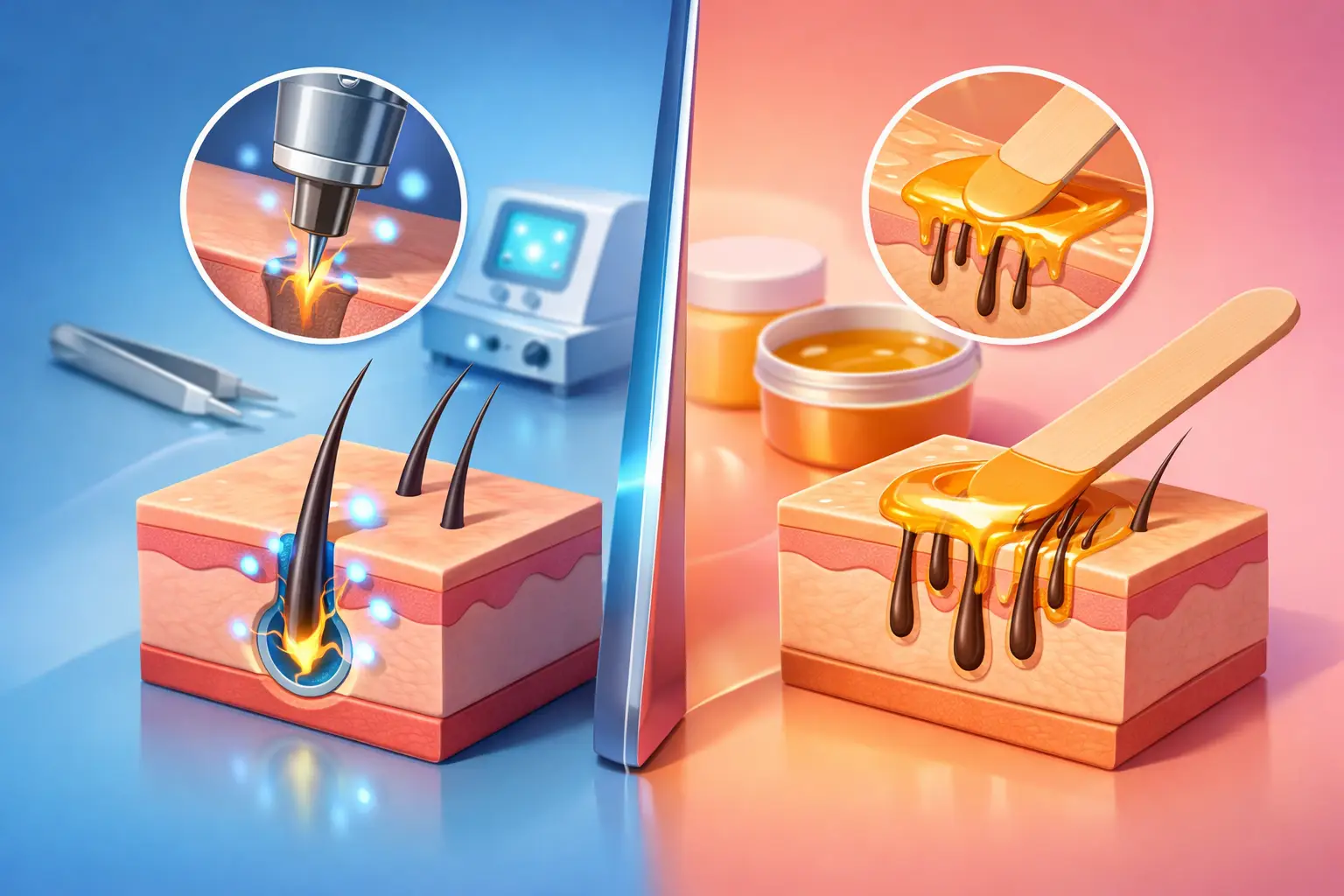
Waxing can leave skin beautifully smooth for weeks. Electrolysis works to permanently disable individual follicles, but it asks for more patience. When people compare electrolysis waxing results, they are usually weighing an immediate smooth finish against a longer-term reduction in hair growth. Both have a place, but they are not interchangeable treatments.
The right choice depends on the area, the amount and colour of hair, your skin sensitivity, and whether your goal is short-term grooming or a lasting solution. For hormonal facial hair, coarse chin growth, stray hairs around the brows, or light and white hairs that laser cannot target, electrolysis is often the more meaningful long-term option.
Electrolysis and waxing results: the key difference
Waxing removes the hair shaft from the root. Because the follicle remains active, it will eventually produce another hair. Most people see smooth skin for around three to six weeks, although regrowth can appear sooner or later depending on the body area, hair cycle and individual hormones.
Electrolysis uses a very fine sterile probe placed into the natural opening of each follicle. A controlled current treats the cells responsible for hair growth, then the hair is removed. When a follicle has been successfully treated, it should not produce another hair. This is why electrolysis is recognised as a method of permanent hair removal, rather than simply longer-lasting temporary hair removal.
That does not mean one appointment clears an area forever. Hair grows in cycles, and only hairs in an active growth stage can be treated effectively. Dormant follicles may become visible weeks or months later. New growth can also be stimulated by hormonal changes, including PCOS, pregnancy, perimenopause or certain medicines. The treated follicle is the focus, not a blanket promise that no new hair will ever develop.
What waxing results look like over time
Waxing is valued for its immediate result. Hair is removed in one visit, and the surface feels smooth straight away once temporary redness has settled. It can be practical for legs, underarms, bikini lines and other larger areas when you want hair removal for a particular event, holiday or maintenance routine.
With regular waxing, some people feel their hair looks softer or less dense. That can happen because hairs are growing back at different times, or because some follicles are affected by repeated trauma. It is not dependable permanent reduction, however. Most follicles continue their normal cycle.
Waxing also requires enough visible length for the wax to grip, usually a few millimetres. For people managing noticeable facial hair, waiting for that length can feel inconvenient or distressing. Waxing may also aggravate folliculitis, ingrown hairs, sensitivity and post-inflammatory pigmentation, particularly where skin is prone to marks after irritation.
The experience is brief but sharp, and redness is common. On resilient skin, that may settle within hours. On reactive skin, or on areas treated with retinoids, strong exfoliants or certain prescription medicines, waxing can cause lifting, prolonged inflammation or broken skin. A professional assessment matters more than simply choosing the quickest method.
What electrolysis results look like over time
Electrolysis rarely gives the instant, fully smooth effect of waxing across a large area. Its result builds gradually. After a properly treated hair is released, the area may look clear, but other follicles in the same zone can emerge later as their cycle changes. Early appointments are therefore about steadily clearing visible growth and reducing the number of active hairs returning.
As treatment progresses, many clients notice longer gaps between hairs, less density and fewer coarse hairs to manage. Small areas, such as upper-lip hairs, chin hairs, nipples, fingers or isolated hairs around the hairline, can be particularly rewarding because the treatment is precise. Electrolysis can also treat hairs of any colour, including blond, ginger, grey and white hair.
The commitment is different from waxing. Each follicle is treated individually, so the total programme depends on the size of the area and density of growth. A few isolated hairs may need short appointments. Dense facial growth or hormonally driven hair can require a consistent schedule over many months. This is not a treatment that should be sold as a quick fix.
Discomfort varies. Clients often describe a small heat sensation or brief sting with each treatment. Areas with dense nerve endings can feel more intense, but settings, technique and appointment length can be adjusted to keep treatment manageable. A skilled practitioner will work at a pace that respects both the skin and the person in the treatment room.
Can you wax while having electrolysis?
It is usually best to pause waxing, tweezing, threading and epilating while pursuing electrolysis in an area. These methods remove the hair from the follicle and can make it harder to assess and treat the growth consistently. Your practitioner may ask you to avoid them for several weeks before starting, depending on the area and your hair pattern.
Shaving or careful trimming is often the preferred option between appointments if you need to manage visible hair, but follow the plan you have been given. The aim is to keep treatment practical without disrupting the growth cycle or irritating the skin.
There can be exceptions. Someone might choose electrolysis for persistent facial hairs while continuing to wax their legs for convenience. That is perfectly reasonable, provided the treatments are kept separate by area. Trying to use waxing as a shortcut within an electrolysis programme for the same hairs generally delays the result you are working towards.
Choosing the method for your concern
Waxing can suit you if you want a temporary result, have a larger area to clear quickly and tolerate it well. It is also a familiar option for occasional grooming. Its main trade-off is that the hair comes back, and the cycle of growing it out, removing it and managing irritation may continue indefinitely.
Electrolysis may suit you if permanence is the priority, if hair is light-coloured or fine, or if you are bothered by a small but stubborn area that keeps returning. It is especially worth discussing for PCOS-related facial hair, although hormonal drivers need realistic expectations and may mean occasional maintenance is needed.
For extensive dark, coarse body hair, laser hair removal can be a more time-efficient starting point because it treats many follicles at once. Electrolysis can then be used to refine the remaining hairs, including those that are too light for laser. A personalised plan may use one method rather than the other, or combine them strategically over time.
Aftercare affects the finish
Whether you wax or have electrolysis, calm skin usually looks and feels better. After waxing, avoid heat, friction, heavy exercise, swimming pools and fragranced products for at least 24 hours if your skin is red or sensitive. Gentle exfoliation only after the skin has settled can help reduce ingrown hairs.
After electrolysis, mild redness, tiny bumps and temporary tenderness are common. Keep the area clean, avoid touching or picking it, and give it a break from make-up, active skincare, heat and intense exercise for the period advised by your practitioner. Daily SPF is particularly important on exposed areas, as inflamed skin is more vulnerable to pigment changes.
If you are prone to cold sores, keloid scarring, pigmentation changes, eczema, rosacea or folliculitis, raise this in your consultation. The same applies if you use prescription skincare or have recently had a peel, microneedling or other corrective treatment. Good treatment planning considers your whole skin history, not only the hair itself.
At Beautilase, the conversation starts with what is actually bothering you: the time spent removing hair, the discomfort of regrowth, the marks left behind, or the confidence impact of a few persistent hairs. From there, a realistic plan can make the process feel far less overwhelming.
Smooth skin for a few weeks can be exactly what you need. If you are tired of repeating the same hair-removal cycle, a considered electrolysis programme may offer a more lasting way forward.