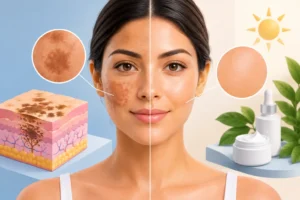

A brown patch that looked noticeably lighter a few months ago can feel frustrating when it starts to deepen again. But pigmentation recurrence causes are rarely as simple as a treatment “not working”. Pigment can be reduced successfully, while the triggers that encouraged it to form remain active beneath the surface or continue in everyday life.
At Beautilase, we approach recurring pigmentation as a management concern, not a quick-fix concern. The aim is to identify what type of pigmentation you have, reduce visible discolouration safely, and create a plan that gives your skin the best chance of staying clear.
What does pigmentation recurrence mean?
Pigmentation is the skin’s production of melanin, the pigment that gives skin its colour. When melanin is produced unevenly or in excess, it can appear as sun spots, freckles, post-inflammatory marks, melasma, or uneven patches of tone.
Recurrence can mean different things. Sometimes a previously treated mark gradually darkens again. Sometimes new patches develop nearby. In melasma, pigment may appear to return in the same symmetrical pattern across the cheeks, forehead, upper lip or jawline. These patterns matter because they point to different drivers and require different treatment choices.
A laser, peel or depigmenting programme may clear existing surface pigment, but no professional treatment can permanently remove your skin’s ability to make melanin. That ability is protective and normal. Long-lasting results depend on reducing the signals that tell pigment cells to become overactive.
The main pigmentation recurrence causes
UV exposure and visible light
Sun exposure is one of the most common reasons pigment returns. Even brief, incidental exposure – driving, walking to the shops, sitting near a bright window or spending time outdoors on an overcast Auckland day – can stimulate melanin production.
For some people, especially those with melasma or deeper skin tones, visible light can also contribute. This is why a broad-spectrum sunscreen is only one part of prevention. A tinted, iron oxide-containing sunscreen may be recommended for certain pigmentation concerns because it can offer additional protection from visible light.
Sunscreen needs to be applied generously and reapplied when you are outdoors, sweating or spending extended time in daylight. A small amount used once in the morning may not provide the protection your pigmentation plan relies on. Hats, sunglasses, shade and sensible timing around intense sun also make a meaningful difference.
Hormonal changes
Hormones can strongly influence melasma and other diffuse facial pigmentation. Pregnancy, hormonal contraception, fertility treatment, perimenopause and hormone replacement therapy may all play a part. Not everyone using these treatments will develop pigmentation, but those who are prone to melasma can find it becomes more persistent or returns more readily.
This does not mean you should stop prescribed medication. It does mean hormonal history should be part of your consultation. Your treatment plan may need to be more conservative, include a longer maintenance phase, or be timed around a significant hormonal change where appropriate.
Heat and inflammation
Heat is often overlooked. Hot yoga, saunas, steam rooms, cooking over heat, intensive exercise and hot weather can aggravate melasma in some people, even when they are diligent with sun protection. Heat increases inflammatory signals in the skin and may activate pigment production.
Inflammation from acne, eczema, dermatitis, an allergic reaction, waxing, shaving, picking spots or an overly aggressive facial can also leave dark marks behind. This is known as post-inflammatory hyperpigmentation. If the inflammation continues, so can the cycle of new pigmentation.
For acne-prone skin, controlling active breakouts is often just as important as fading the marks they leave. For reactive skin, a treatment that looks strong on paper is not necessarily the best choice. Skin that is repeatedly irritated can become more pigmented, not less.
Using the wrong products, or too much of the right ones
Retinoids, exfoliating acids, vitamin C and pigment-correcting ingredients can be useful, but more is not always better. Layering several active products, applying them too frequently, or starting them too soon after a clinic treatment can compromise the skin barrier. The result may be redness, stinging, peeling and inflammation – all of which can make pigmentation more difficult to manage.
On the other hand, stopping a prescribed maintenance product as soon as the skin looks clear can allow pigment activity to build again. The right routine is individual. It should match your diagnosis, skin sensitivity, lifestyle and the treatments you have had.
A treatment plan that does not match the pigment type
Not all brown marks respond in the same way. Freckles and discrete sun spots may respond well to carefully selected laser treatment. Post-inflammatory marks may need inflammation control, skin-barrier support and gradual pigment correction. Melasma is more complex and can worsen with excessive heat or poorly chosen energy-based treatment.
This is why assessment matters. Treating all pigmentation as “sun damage” can lead to disappointment, particularly when the underlying concern is melasma. In some cases, a medical-grade peel, a Dermamelan or Cosmelan programme, homecare and strict photoprotection may be more suitable than treating with laser alone. In others, a staged combination plan is the safer route.
Why pigmentation can look worse before it settles
After certain treatments, pigment can temporarily look darker before it lifts or fades. This may happen when surface pigment becomes more visible as it moves upwards through the skin. Mild temporary darkening can be expected with some laser and peel protocols, but it should be explained clearly before treatment.
There is a difference between expected pigment shedding and post-inflammatory hyperpigmentation. If an area becomes increasingly dark, irritated, itchy, painful or uneven after treatment, contact your practitioner rather than adding more exfoliants at home. Early guidance can help prevent a minor reaction becoming a longer-term setback.
How to reduce the chance of recurrence
The best prevention plan is consistent rather than complicated. For most clients, this means daily high-protection sun care, a tailored home routine and maintenance appointments when needed. The exact combination depends on whether your pigmentation is superficial, deeper, hormonally influenced, inflammation-led or a mix of several factors.
A useful plan may include the following:
- Daily broad-spectrum SPF 50+ applied properly, with reapplication during outdoor exposure.
- Protective habits such as hats, shade and limiting direct midday sun where practical.
- Medical-grade pigment-supporting skincare selected for your skin, rather than a collection of strong products used at random.
- A gradual return to active ingredients after procedures, following your practitioner’s instructions.
- Maintenance treatment scheduled around your skin’s pattern, the seasons and known triggers.
There are trade-offs. Stronger treatments may offer faster visible improvement for the right concern, but they can carry a greater risk of irritation in reactive or melasma-prone skin. Gentler approaches may take longer, yet support better long-term control. The most appropriate plan is not always the fastest one.
When to seek a professional assessment
Book an assessment if pigmentation is changing quickly, looks different from your usual marks, has an irregular border, varies in colour, bleeds, crusts or becomes raised. Cosmetic treatments should only begin once concerning lesions have been appropriately assessed by a medical professional.
It is also worth seeking guidance when pigmentation keeps returning despite good skincare and sunscreen use. A close look at your history, medication, hormones, sun exposure, skin sensitivity and previous treatments can reveal why a plan has stalled. For clients with recurring melasma, sun damage or post-acne marks, a personalised programme can be far more effective than repeatedly trying the latest brightening product.
Clearer skin is not about being perfect with every product or never enjoying time outdoors. It is about understanding your triggers, treating your skin with enough care to avoid unnecessary inflammation, and having a realistic plan that evolves with you.