
A brown mark can feel far more noticeable than it looks to anyone else. Whether it is a cluster of sun spots on the cheeks, freckles that have deepened over summer, or pigmentation left after a breakout, laser pigmentation removal can be an effective way to target unwanted excess pigment without treating the entire face. The key is matching the treatment to the cause of the discolouration, your skin type and how your skin behaves.
At Beautilase, we take a careful, individual approach because pigmentation is not one single concern. Two marks may look similar in the mirror yet respond very differently to laser treatment. A proper consultation helps us identify what we are treating and, just as importantly, when another approach may be safer or more effective.
What laser pigmentation removal can treat
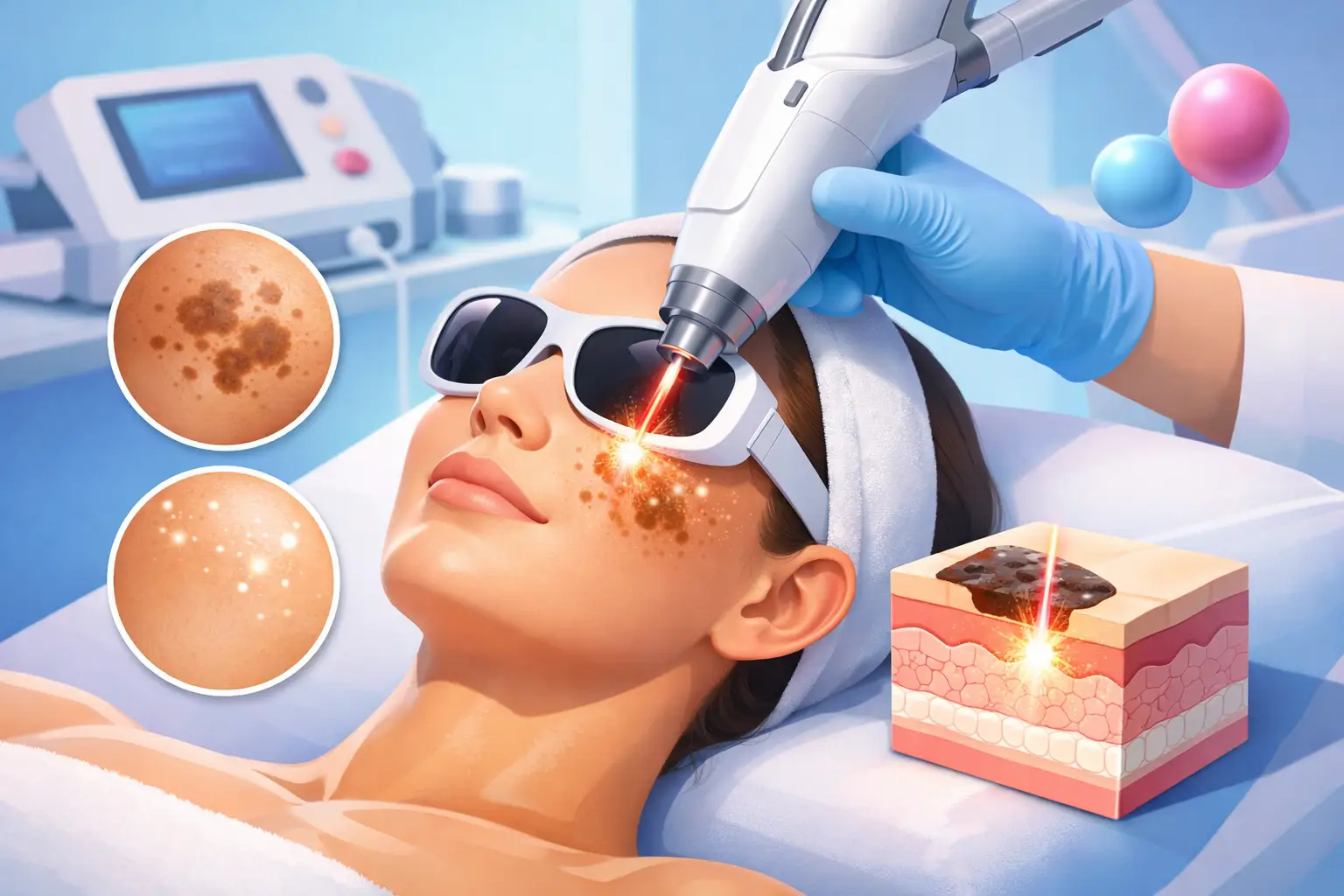
Laser technology directs controlled light energy into pigment in the skin. The pigment absorbs that energy, breaks into smaller particles and is gradually cleared by the body. This selective process allows us to focus on visible discolouration while minimising disruption to the surrounding skin.
Laser pigmentation removal is often suited to clearly defined, superficial pigment such as sun damage, age spots, solar lentigines and freckles. It may also help with some post-inflammatory pigmentation, which can appear after acne, irritation, ingrown hairs or a skin injury. The best candidates are usually marks with a stable, identifiable colour and border rather than diffuse, shifting patches.
Results vary. Some superficial spots darken temporarily, form a light crust and fade after one treatment. Others need a course of sessions, particularly where pigment sits deeper in the skin or has accumulated over years of sun exposure. No responsible clinic should promise that every mark will disappear completely or remain gone forever.
Pigmentation that needs extra caution
Melasma is the clearest example of why diagnosis matters. It often appears as larger, symmetrical patches across the cheeks, forehead, upper lip or jawline, and can be influenced by hormones, heat, sunlight and inflammation. Although it is commonly called pigmentation, it behaves differently from a sun spot.
Laser treatment can sometimes aggravate melasma or trigger rebound pigmentation if it is not carefully selected and supported by a wider skin-management plan. In these cases, medical-grade skincare, sun protection and programmes such as Dermamelan or Cosmelan may be more appropriate, either before laser treatment or instead of it.
Pigmentation also needs assessment if a mark is new, changing in shape or colour, raised, itchy, bleeding or irregular. Cosmetic laser treatment is not a substitute for a medical skin check. Where there is any uncertainty, we will advise you to speak with your GP or dermatologist first.
Your consultation comes before the laser
A good treatment plan starts with questions, not a machine. We will discuss when the pigmentation first appeared, whether it changes with sun exposure, your history of acne or skin sensitivity, medications, hormonal factors and previous treatments. We also assess your skin tone, the depth and pattern of the pigment, and your ability to follow aftercare.
This matters especially for deeper skin tones and skin that is prone to post-inflammatory hyperpigmentation. Laser settings, preparation and aftercare may need to be adjusted to reduce the risk of unwanted lightening or darkening. Sometimes a patch test is the sensible first step.
You should also be open about recent tanning, fake tan, active skincare and any history of cold sores if treatment is planned near the mouth. Retinoids, exfoliating acids and certain medications can affect how the skin responds. There is no benefit in rushing into a treatment when the skin barrier is irritated or sun-exposed.
What happens during a laser pigmentation treatment?
Your skin is cleansed and prepared before treatment. Protective eyewear is always worn, and the practitioner then delivers short pulses of laser energy to the pigmentation. Most clients describe the sensation as a quick elastic-band snap with heat. It is brief, but comfort is still important, so cooling methods may be used where suitable.
Treatment time depends on the area. A small collection of spots may take only a few minutes, while treating the full face, décolletage or hands takes longer. The appointment itself is usually straightforward, but the planning around it is where much of the expertise lies.
Immediately afterwards, the area may look pink or feel warm. Pigmented spots often appear darker within the first day or two. This is expected and can be a reassuring sign that the pigment has responded, but it can be socially inconvenient if you have an event planned. Give your skin time rather than booking immediately before a wedding, holiday or important photographs.
Healing and aftercare: where results are protected
The skin’s response after laser pigmentation removal is part of the treatment, not an afterthought. Darkened spots may look like tiny coffee grounds before they flake away naturally over several days. Do not pick, scrub or use harsh exfoliants to speed this up. Prematurely removing the surface can increase irritation and the risk of post-inflammatory pigmentation.
For the first few days, keep your routine gentle. Use the recommended cleanser, moisturiser and calming products, and avoid saunas, steam rooms, intense workouts and excessive heat if your skin remains flushed. Makeup may be appropriate after treatment depending on the area and how your skin is responding, but clean brushes and gentle removal are essential.
Daily broad-spectrum SPF is non-negotiable. We recommend applying sunscreen generously and reapplying when outdoors, alongside hats and shade where practical. Auckland’s UV levels can be high even on overcast days, and fresh sun exposure can quickly undo progress or encourage new pigment to form.
When will you see a difference?
Some spots can look clearer within one to two weeks after the treated pigment sheds. Deeper or more widespread concerns may improve more gradually over a series of appointments. Your practitioner will advise a treatment interval that gives the skin adequate time to recover and respond.
Maintenance is normal, not a failure. Laser can clear existing excess pigment, but it cannot stop future UV exposure, hormonal changes or inflammation from creating new pigment. The combination of treatment, appropriate homecare and consistent sun protection is what gives results their best chance of lasting.
Understanding the possible risks
Laser treatment is advanced and precise, but it is still a controlled injury to the skin. Temporary redness, swelling, tenderness and darkening of the treated spots are common. Less common risks include blistering, prolonged redness, scarring or changes in skin colour.
The likelihood of complications is reduced when treatment is performed by an experienced practitioner using suitable settings, with honest screening and clear aftercare. It is also reduced when clients resist the temptation to treat tanned skin, conceal a medication change or pick at healing areas. Good outcomes are a partnership.
Be cautious of heavily discounted treatments that offer a standard setting for every client or promise to remove all pigmentation in one session. A personalised plan may feel less convenient than a quick offer, but it is much kinder to your skin.
Choosing the right plan for your skin
The most satisfying results are often not about making skin look filtered or completely poreless. They are about reducing distracting spots, improving overall evenness and helping you feel comfortable leaving the house with less make-up if that is your goal.
For some clients, laser is the right first treatment. For others, we may recommend preparing the skin with targeted skincare, treating active acne first, combining laser with a peel at an appropriate stage, or managing melasma with a dedicated pigmentation programme. There is no one-size-fits-all answer, and that is exactly why a thoughtful consultation matters.
The helpful next step is to have the pigmentation assessed while it is visible and stable, then choose a plan that respects both your result and your skin’s long-term health.